
Did Washington’s Future Backcourt Just Arrive?
Washington didn’t have to wait until 2027 to get a glimpse of its future.
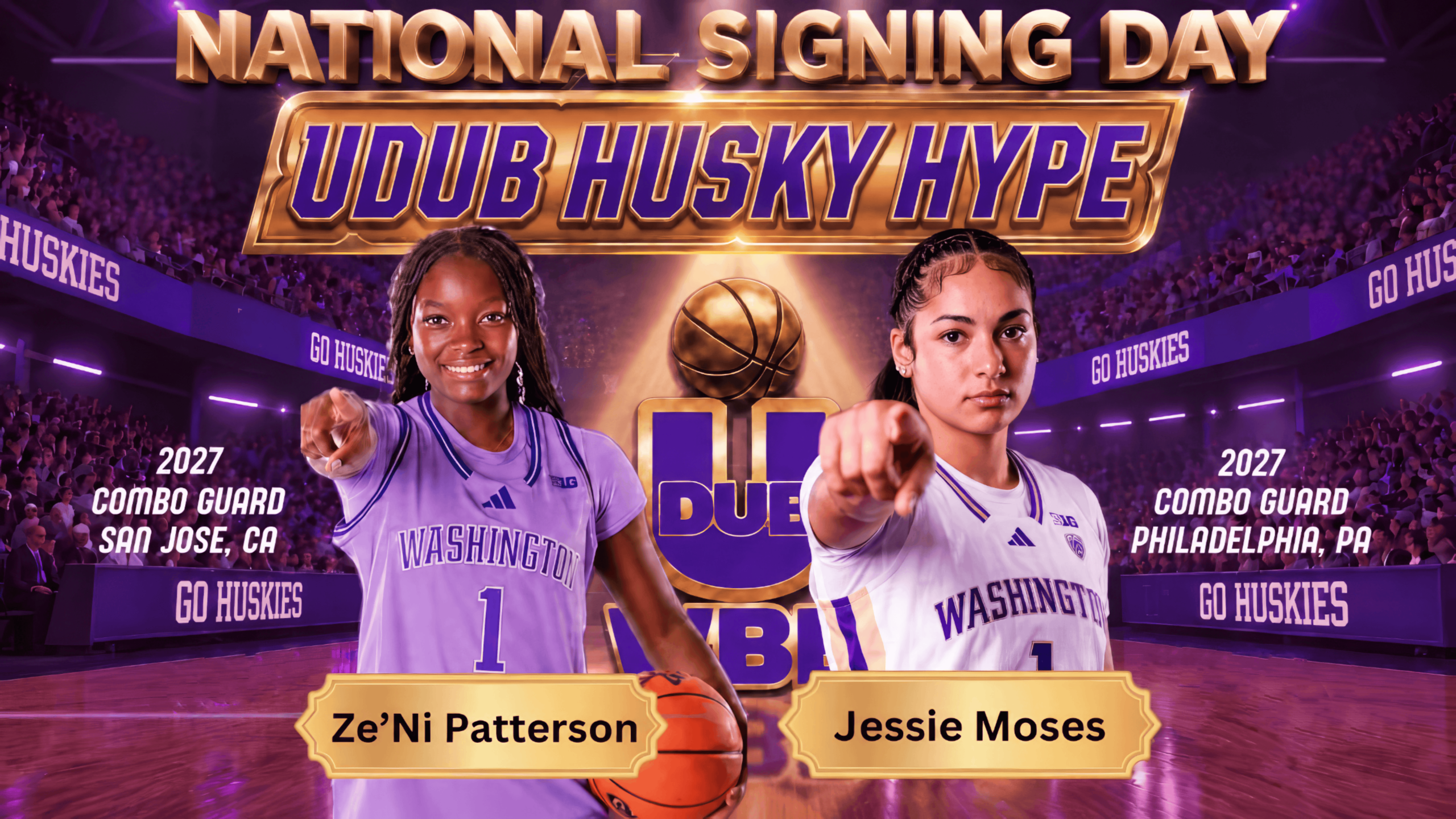
On National Signing Day, the Huskies officially secured signatures from two of the nation’s most coveted young guards, as ESPN Top 100 prospects Jessie Moses and Ze’Ni Patterson signed their National Letters of Intent to join Tina Langley’s program. The additions extend Washington’s recruiting momentum and reinforce a philosophy that has become increasingly clear during Langley’s tenure: build around skilled, intelligent guards who can impact the game in multiple ways.
While recruiting rankings help illustrate the caliber of talent headed to Seattle, the bigger story may be how seamlessly both players fit the blueprint Washington has spent years establishing. Moses arrives as one of the country’s premier shot creators and playmakers. Patterson brings two-way versatility, perimeter shooting, and a relentless competitive edge. Together, they form the foundation of what could become Washington’s next standout backcourt.
More importantly, their commitments signal that the Huskies continue to attract elite talent capable of competing at a Big Ten level while embracing the culture Langley has built on Montlake.
National Signing Day Delivers Langley Another Recruiting Win
For Washington, Wednesday’s announcement was about more than adding two talented players to a future roster. It was another reminder that the Huskies are increasingly winning recruiting battles against programs across the country.
Moses arrives at Washington as a five-star prospect and one of the highest-rated guards in the 2027 class. The 5-foot-9 combo guard from Penn Valley, Pennsylvania, is ranked No. 30 in the 247Sports Composite rankings and No. 45 in ESPN’s national rankings. Her recruitment became a coast-to-coast battle, with schools including Michigan, Alabama, Texas A&M, and dozens of other Division I programs pursuing her services.
Patterson gives Washington another nationally respected addition. The 5-foot-8 guard from Archbishop Mitty High School in San Jose, California, is ranked No. 86 nationally in the class and earned MaxPreps Junior All-American honorable mention recognition. Before committing to Washington, Patterson considered Michigan State, California, Harvard, and TCU.
Taken separately, either commitment would have represented an important recruiting victory.
Landing both in the same class further illustrates Washington’s trajectory.
Washington’s recruiting success in recent cycles has steadily expanded beyond its traditional footprint. The Huskies continue to recruit effectively on the West Coast while attracting top prospects from nationally prominent programs and basketball hotbeds throughout the country. In an era where recruiting battles routinely involve multiple power-conference programs, those victories matter.
They also reveal something about how Washington evaluates talent.
A Common Thread in Washington’s Recruiting Philosophy
Talent alone does not explain why Washington prioritized Moses and Patterson so heavily.
Since arriving on Montlake, Head Coach Tina Langley, Recruiting Lead Latara King, and the Washington staff have consistently targeted players whose games align with a distinct identity. The Huskies want guards who can think the game, defend with intensity, create advantages without monopolizing possessions, and elevate teammates through their decision-making.
That philosophy helps explain why this recruiting class is so intriguing.
Moses and Patterson bring different strengths, but both fit the profile Washington has consistently prioritized. Each can play on or off the ball, impact winning beyond scoring, and contribute across multiple lineup combinations. Rather than assembling redundant pieces, the Huskies added two complementary guards whose skill sets align with the program’s long-term vision.
Jessie Moses Gives Washington a Dynamic Offensive Catalyst
Among the two signees, Jessie Moses arrives carrying perhaps the highest national profile.
Her reputation has been growing for years.
Before transferring to IMG Academy, Moses starred at Westtown School, where she became one of the most accomplished players in program history. She began playing varsity basketball as an eighth grader and helped lead Westtown to three consecutive Pennsylvania Independent Schools Athletic Association state championships.
By the time she left, she had surpassed 1,000 career points while establishing herself as one of the nation’s elite backcourt prospects.
The numbers alone tell a compelling story.
During her sophomore season, Moses averaged 19.0 points, 3.4 rebounds, 3.0 assists, and 3.0 steals per game while shooting 40.7 percent from three-point range.
Yet what makes Moses particularly attractive as a college prospect goes beyond production.
She scores in a variety of ways.
She can create separation off the dribble. She can punish defenses that leave her open from deep. She can facilitate for teammates. She is comfortable operating in transition and equally comfortable navigating half-court possessions.
That versatility allows her to fit alongside different personnel groupings and offensive systems, making her the type of guard coaches can build around.
Langley highlighted those qualities when discussing Moses on signing day.
“Jessie is one of the most skilled and versatile guards in the country. She is a natural playmaker whose feel for the game and high basketball IQ show up on every possession.”
Those comments align with what appears on film.
Moses consistently demonstrates patience, timing, and an understanding of how to manipulate defenders. Rather than relying solely on athleticism, she frequently creates opportunities through anticipation and decision-making.
Those traits often translate particularly well to the college level.
Beyond the Numbers: Why Moses’ Ceiling Is So High
Statistics explain part of Moses’ appeal. Her basketball IQ may explain the rest.
One of the challenges facing highly regarded recruits is adapting to a new role after arriving on campus. Players accustomed to dominating possessions at the high school level often find themselves sharing responsibilities with equally talented teammates.
Moses appears equipped for that transition.
Because she impacts the game in multiple ways, she does not need a specific role to remain effective. Her shooting creates spacing. Her passing facilitates offense. Her defensive instincts generate activity. Her understanding of pace allows her to thrive in both transition and half-court situations.
Perhaps most importantly, Moses plays with a maturity that suggests she understands how winning basketball works.
Whether she ultimately develops into Washington’s primary offensive creator or thrives within a balanced backcourt, her skill set provides numerous avenues for success.
That flexibility is one reason she projects as such an important addition to the program.
Patterson Brings A Competitive Edge Championship Programs Need
If Moses projects as the offensive catalyst of Washington’s 2027 class, Ze’Ni Patterson brings many of the qualities coaches value just as highly.
The Archbishop Mitty standout arrives from one of the nation’s premier high school programs, but her reputation extends well beyond team success. Patterson has steadily emerged as one of the most competitive and versatile guards in her class.
That reputation accelerated during the summer evaluation period.
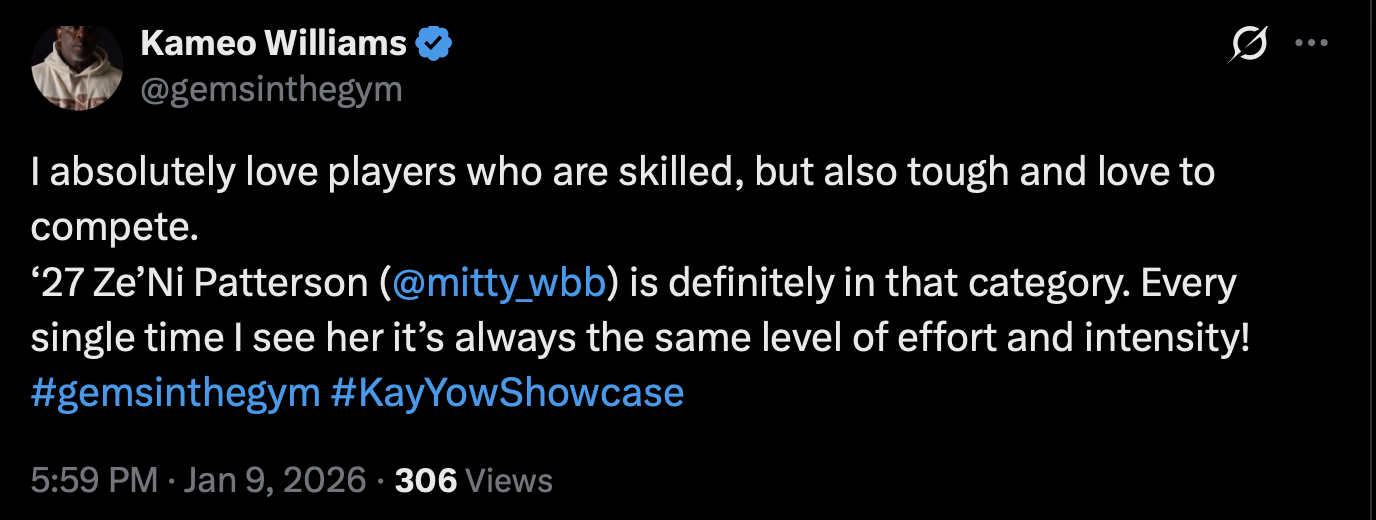
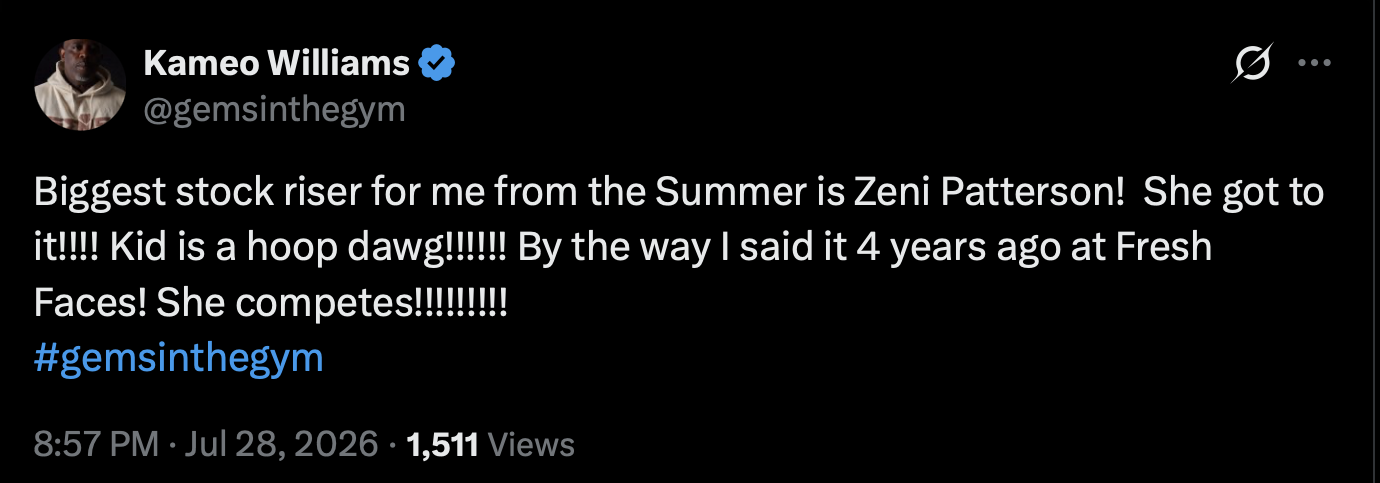
Talent evaluator Kameo Williams of Gems in the Gym called Patterson his “biggest stock riser” of the summer, highlighting her relentless motor, toughness, and ability to impact games on both ends of the floor against elite competition.
 As impressive as each player is individually, the most intriguing aspect of this recruiting class may be how naturally their games fit together.


