

On February 11th at 4:30pm Pacific, the Washington Huskies (18–6, 8–5 Big Ten) travel to Carver‑Hawkeye Arena to face the Iowa Hawkeyes (18–5, 9–3 Big Ten) before an expected raucous home crowd.

This matchup offers a fascinating contrast in styles: Washington leans into disciplined defense with scoring balance and controlled pace, while Iowa thrives on uptempo offensive pace, interior efficiency, and perimeter shooting.
The Dawgs challenge will be managing tempo, controlling the glass, and making Iowa uncomfortable in its own building.
The Scoring Numbers
On paper, both teams look like top‑tier conference contenders, but they win in different ways.
Washington enters averaging 74.1 points per game by shooting a strong 35.7% from three and finishing with 63.5% efficiency at the rim, blending perimeter spacing with efficient interior looks.
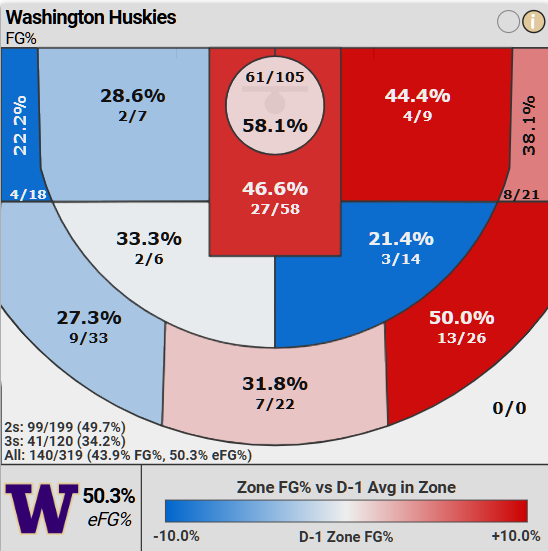 Meanwhile, the Dawgs stingy defense holds opponents to just 60.9 points — a 13‑plus point scoring margin that reflects the Huskies’ defensive discipline and ability to string together stops.
The Iowa Hawkeyes, however, push the tempo even harder.
The Hawkeyes average 79.9 points per game by shooting 36.1% from three-point range and an elite 66.9% finishing at the rim, which underscores how dangerous they are when they get downhill or establish their post game.
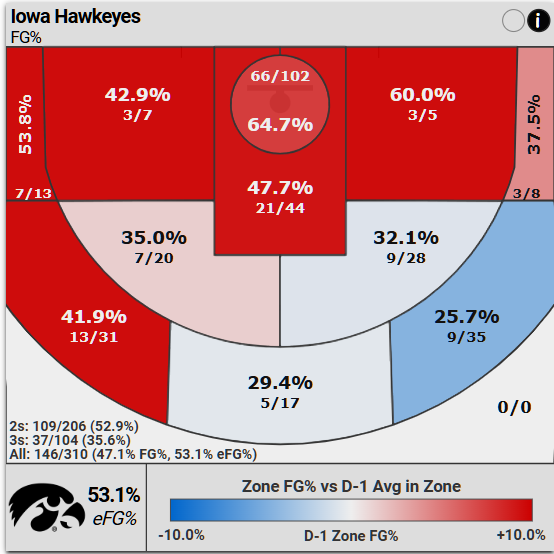 Iowa’s defense gives up 66.1 points, not as tough as UW’s defense but leaning on their superior offensive firepower.
While the Dawgs’ defense generally tightens the screws on game pace and tempo, Iowa’s numbers suggest they are comfortable in a high‑scoring, up‑and‑down contest.
Battle on the Glass and in the Paint
Although Iowa’s scoring numbers grab attention, the rebounding battle could quietly decide the night.
Washington averages 40.5 total rebounds per game, including 13.3 offensive rebounds. That second‑chance activity often keeps the Dawgs in control of tempo and allows them to weather cold shooting stretches.
The Huskies are strong at team-rebounding, anchored by Avery Howell and Brynn McGaughy, and have shown they can carve out extra possessions against most Big Ten opponents.
Iowa is nearly identical on the boards, posting 40.6 rebounds per game with 11.6 offensive rebounds.
Likewise, the Huskies are strong performers scoring inside-the-paint at 37.1 per game.
Again, Iowa is nearly identical scoring 38.8 points inside-the-paint.
This statistical dead heat suggests that individual matchups, effort, and discipline will be pivotal.
If Washington can score inside consistently, while converting its offensive rebounds into efficient kick‑outs and put‑backs while limiting Iowa’s second‑chance points, the Huskies can shift the game toward their preferred defensive rhythm.
Conversely, if Iowa’s bigs dominate inside, the Hawkeyes’ already potent scoring attack becomes even harder to contain.
The Sayvia Sellers Effect
Every scouting report on Washington starts with Sayvia Sellers.
Sellers is the Huskies’ primary engine, combining quickness, shot‑making, and playmaking to drive UW’s offense.
Sellers averages 19.6 points with elite 38.2% shooting from three-point range and elite 71.4% efficiency at the rim; plus dishing a team-leading 3.4 assists.
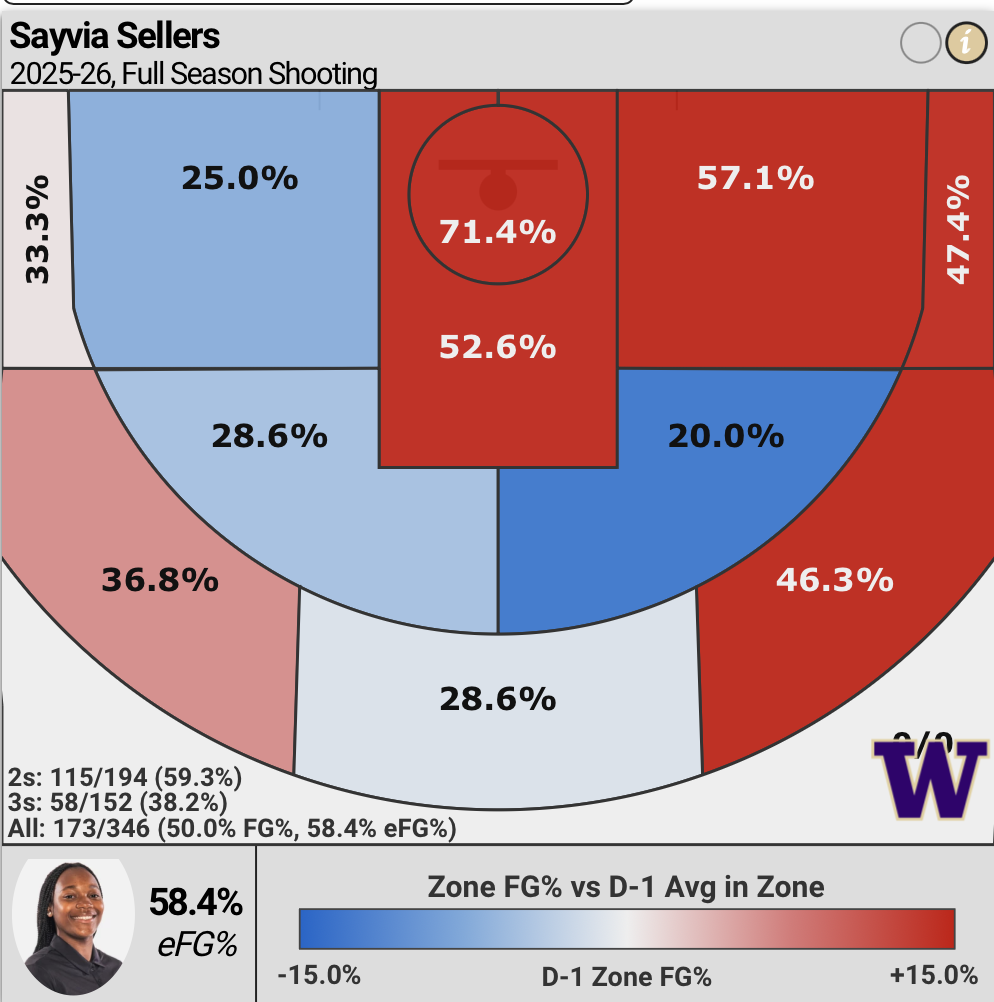
When Sellers is attacking off the dribble, she forces defenses to collapse, which creates clean looks from three and space for cutters at the rim. Her ability to control pace—choosing when to push and when to pull the ball out—will be critical against an Iowa team that wants to run.
Beyond scoring, Sayvia Sellers sets the tone defensively with a team-leading 1.7 steals.
If Sellers can effectively pressure Iowa’s primary ball handlers while still delivering her usual offensive production, Washington gains a critical edge.
Iowa’s perimeter defense will be under constant pressure; and any backcourt foul trouble could open the door for the Dawgs to dictate terms.
Washington’s Balanced Core
While Sellers orchestrates, Avery Howell, Elle Ladine, and Brynn McGaughy provide the balance Washington needs to hang with top offenses.
Avery Howell remains the Huskies’ stabilizer on the glass and a reliable two‑way force.
A 6’0″ wing-guard, Avery Howell is averaging 13.9 points, 8.3 rebounds, and 1.4 steals per game while shooting a scorching 42.7% from deep — her ability to stretch the floor and dominate the glass makes her a tough matchup.
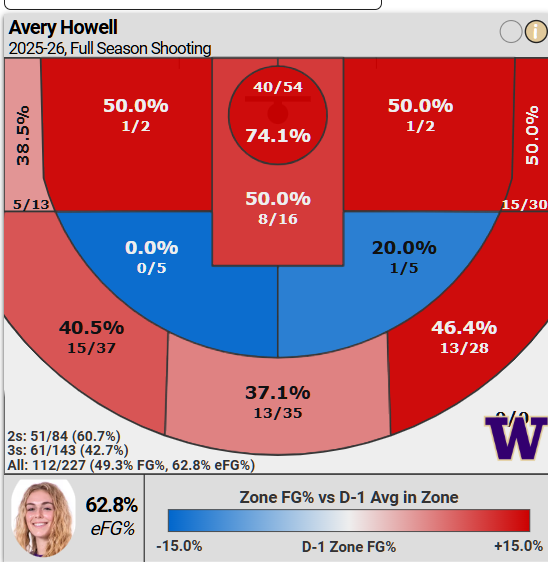 Howell cleans up defensive boards, initiates fast breaks, and adds timely scoring with put‑backs and long‑range jumpers.
Elle Ladine gives UW a versatile, attacking wing who can score, defend multiple spots, and provide secondary playmaking.
Elle Ladine adds 9.9 points per game and hits 37.7% from three, along with the ability to attack the lane and finish efficiently at the rim.
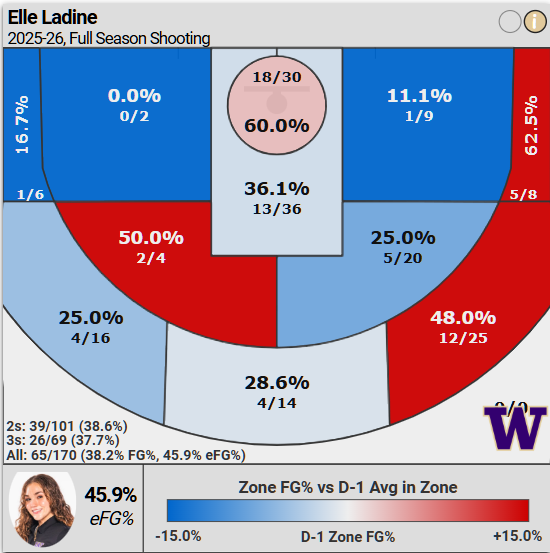
Her ability to slash off the catch, draw fouls, and finish through contact is vital when defenses overload toward Sellers.
Meanwhile, 6’3″ freshman forward Brynn McGaughy brings size and rim protection, providing 8.7 points, 4.7 rebounds, and 1.3 blocks while converting 70% at the rim, anchoring Washington’s interior presence.
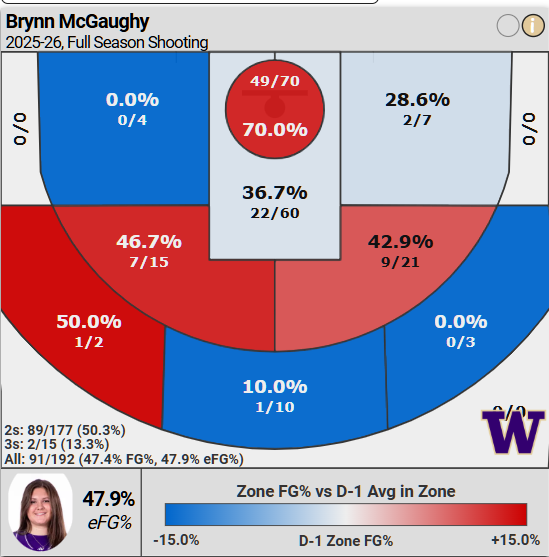 Supported by Washington’s strong 4.6 blocks per game as a team, McGaughy’s matchup against Iowa’s interior scorers will go a long way toward determining whether the Huskies can keep Iowa from feasting at the rim.
Iowa’s High Octane Attack
Iowa’s offensive attack revolves around a trio of players whose strengths complement each other and force defenses into uncomfortable choices.
6’4 center Ava Heiden anchors the offense with elite efficiency on the block, scoring 16.7 points per game on 63.2% shooting; grabs 7.3 rebounds, and blocks 1 shot per game.
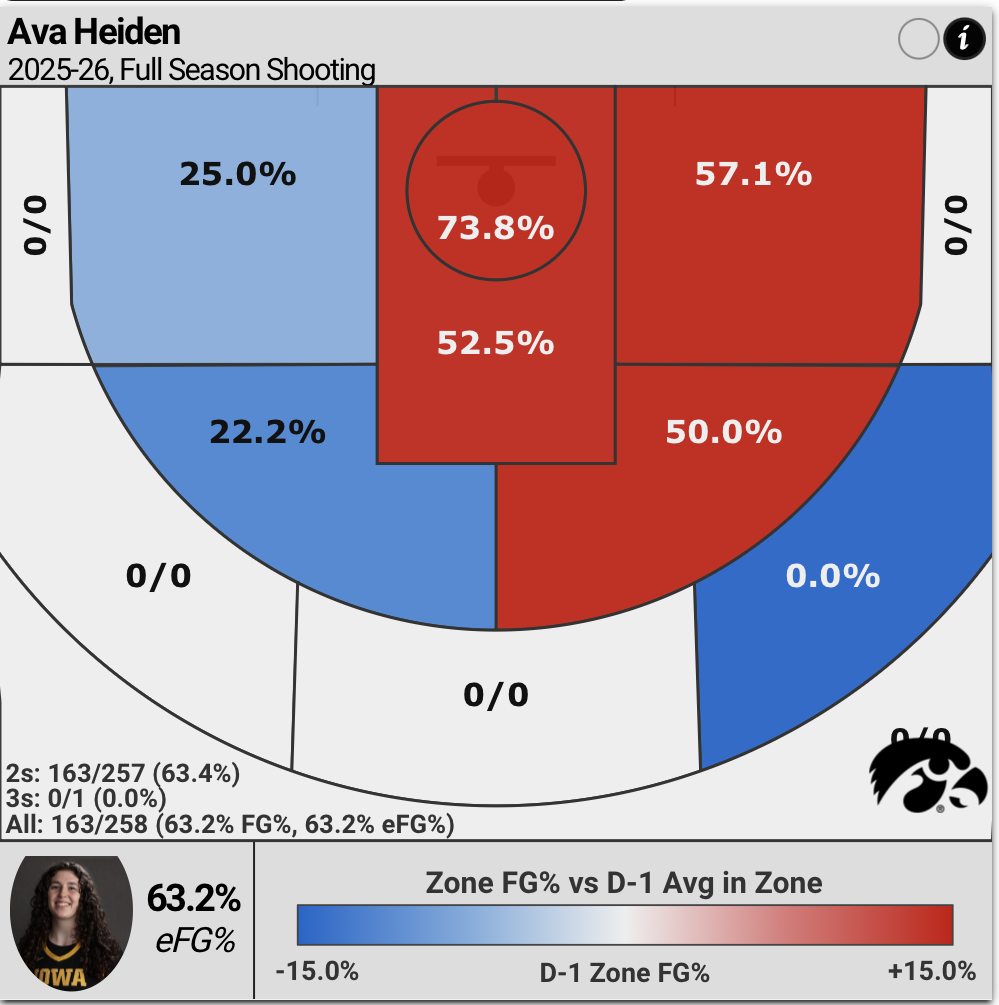
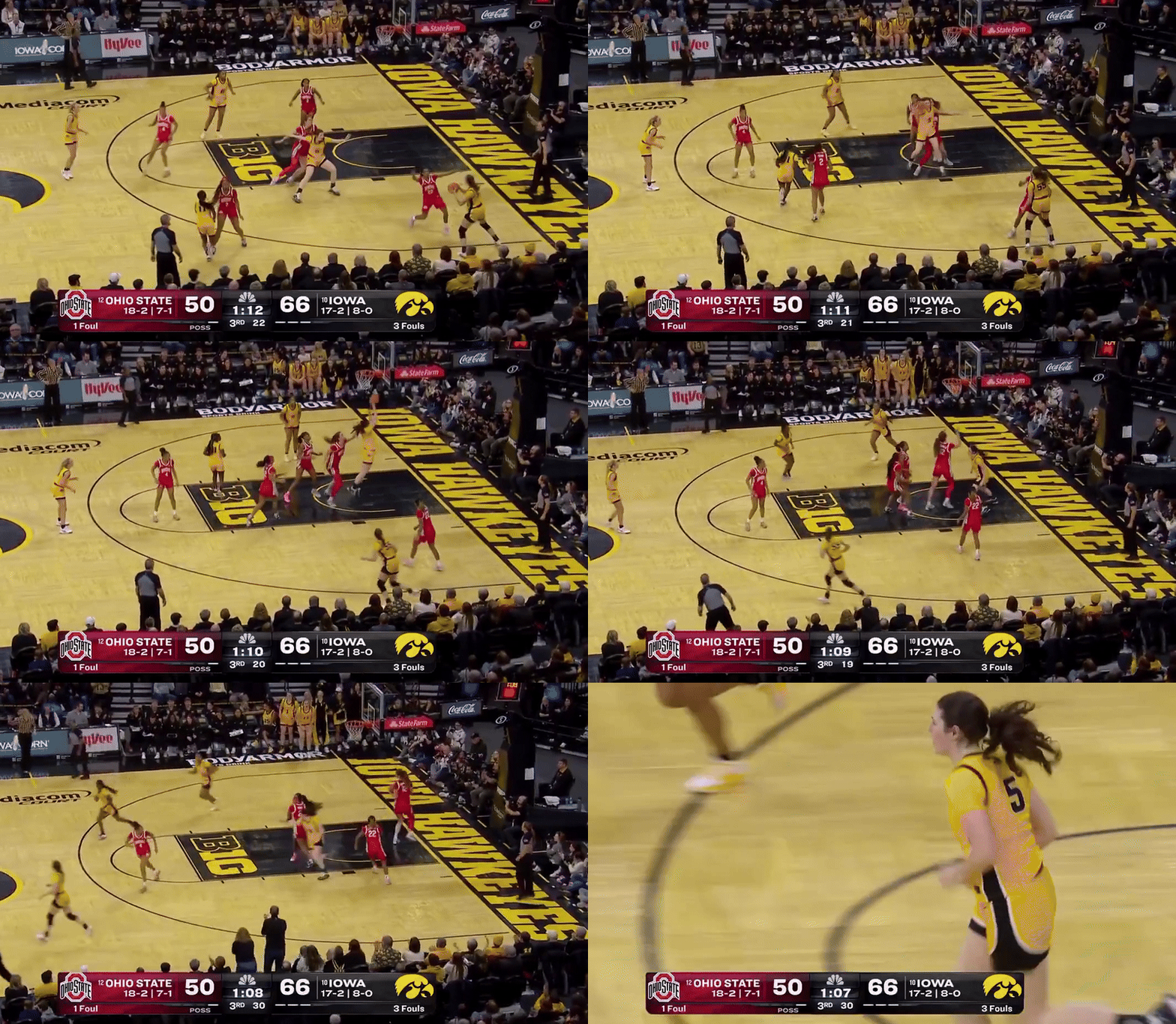 Heiden’s ability to seal deep in the post and finish through contact makes her one of the Big Ten’s most reliable interior options. When she gets early shot clock touches, opponents often have to choose between sending help or risking foul trouble on their primary post defenders.
Athletic 6’2″ forward Hannah Stuelke scores 14 points per game, as a highly effective scorer at the rim with 63.6% accuracy; as well as 56% accuracy farther out in the lane.
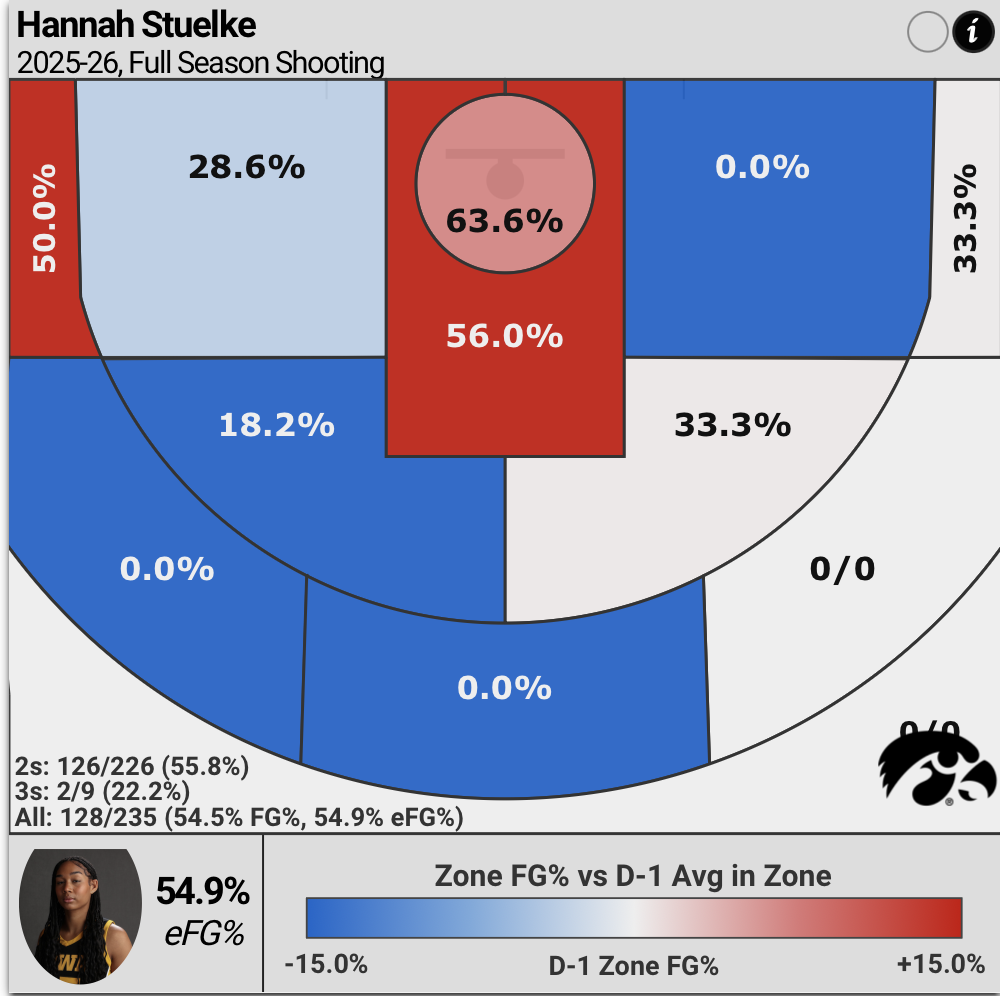
 Stuelke’s ability to extend Hawkeyes possessions beyond one-shot and create second‑chance scoring opportunities is critical to Iowa’s success. Also, her activity level on the glass can force opponents to commit extra bodies to box her out, which can wear down defenders while freeing shooters and cutters.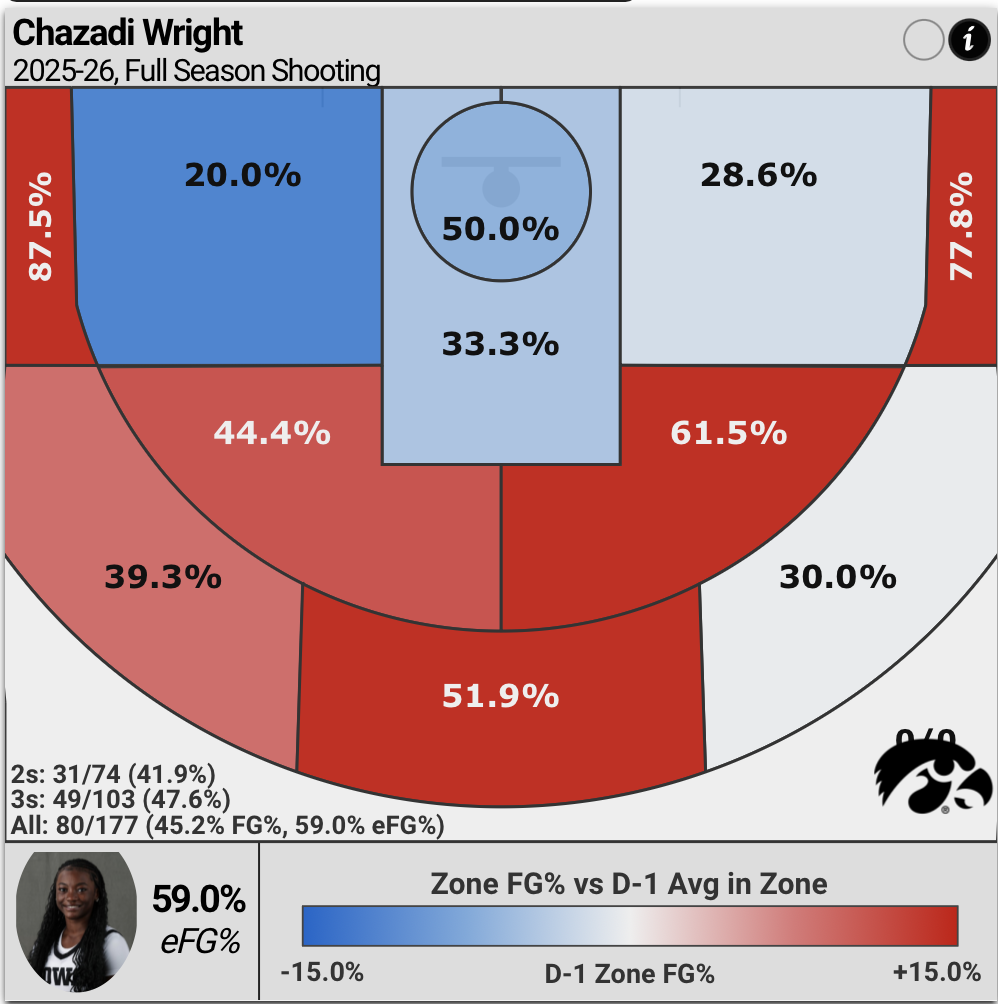
 Wright is a high impact player that can bomb threes from long range or effectively read defenses and keep the ball moving in Iowa’s high‑assist structure — when she dictates tempo and forces defensive rotations, Iowa’s offense becomes difficult to contain.

