
How Tilda Trygger Elevates Washington’s Schemes
When the Washington Huskies acquired 6’6″ rising junior forward Tilda Trygger from the transfer portal, it sent shockwaves throughout the women’s college basketball world. It signaled the arrival of Tina Langley’s Huskies program as a true national player on the recruiting scene (particularly, as a followup to the transfer of Avery Howell from USC the year before); and announced Washington’s intent to be a national program with aspirations of NCAA national championship relevancy.
Make no mistake, UW’s cost in sweat equity and financial commitment to secure Trygger’s services was not made with intentions of another 2nd Round NCAA Tournament exit next season. If there is a floor for next season, it is now a Sweet 16 appearance.
Higher and greater expectations for the Dawgs are well-founded because Trygger isn’t just a talent upgrade for the Huskies — she’s a structural improvement for what Washington already aims to be under Head Coach Tina Langley. Her skill set plugs directly into three core pillars of the Huskies’ identity: spacing, tempo, and defensive versatility.
1. Spacing the Floor Without Sacrificing Size
Washington’s offense works best when the floor is stretched horizontally, creating driving lanes for guards and isolations for Brynn McGaughy. Tilda Trygger’s shooting profile — efficient finishing inside (69.8% at the rim) and legitimate three‑point touch (33.9% from three) — gives UW more of something it hasn’t consistently had: a big who can pull opposing centers away from the rim, then shoot from deep or go hard to the basket.
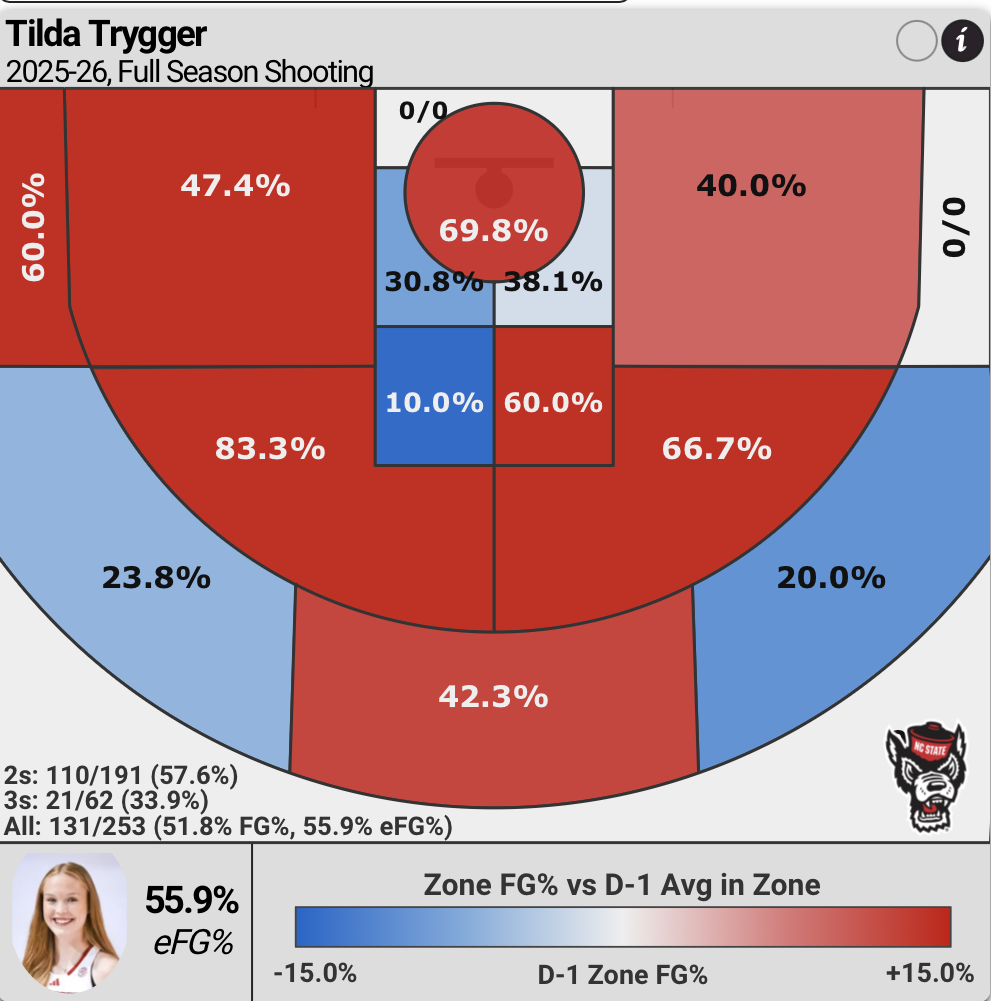
That single change unlocks multiple actions:
5‑out ball screens where Trygger pops to the arc, forcing a slow-footed center to defend in space.
SIngle-High Screen or Double-High Screen(Horns) with Tilda and/or Brynn at the 3-point line to help free Sayvia Sellers to attack downhill even in half-court offensive sets .
High‑low looks interchangeable with Brynn McGaughy, who thrives catching at the free throw line or short corner — with Tilda having the ability to flash to the low post to score over defenders.
Empty‑side pick‑and‑rolls that isolate a guard and a big with no weak‑side help.
Double big screens for elite sharpshooter Avery Howell to free her for catch and shoot threes (to counter strong denial defense, like she faced vs. TCU in UW’s second round NCAA tournament game).
Trygger doesn’t need high volume to impact spacing — her ability to shoot is enough to reshape defensive coverage.
2. A Perfect Fit for Washington’s Pace‑and‑Space Transition Game
Tina Langley’s teams are at their best when they run selectively but decisively. Trygger fits that rhythm:
She runs the floor well for her size, which turns defensive rebounds into early‑offense opportunities.
She’s a high‑efficiency rim runner, which pairs beautifully with Sayvia Sellers’ ability to push tempo.
Her touch around the basket means Washington can finish transition possessions without needing to reset.
This is where her pairing with McGaughy becomes especially dangerous. One big can rim run while the other trails into an open three-pointer — a nightmare for defenses trying to match up in transition.
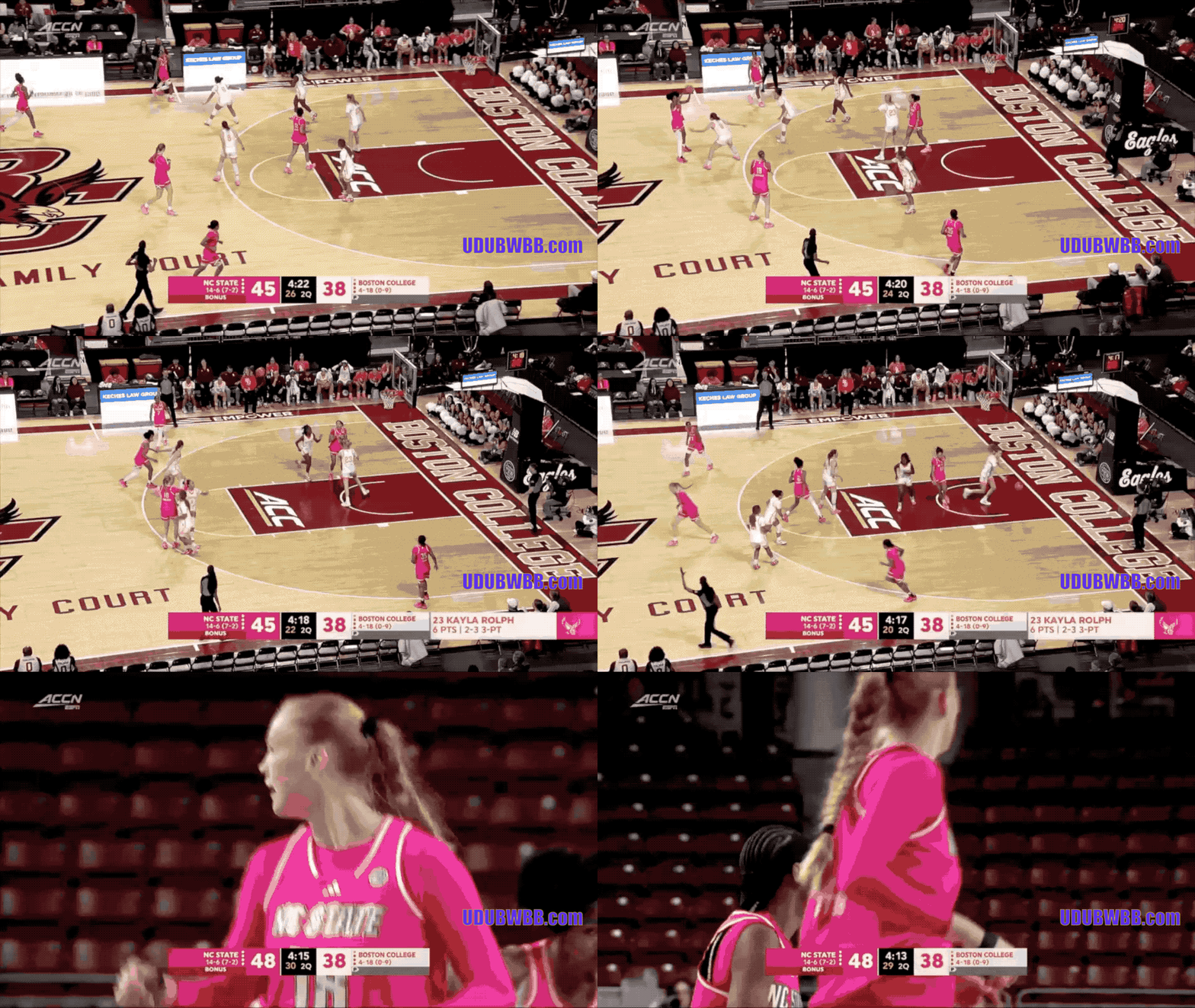
3. Defensive Versatility That Expands Washington’s Coverage Options
Washington’s defense has been solid, but Trygger gives Langley more schematic flexibility:
Rim protection (1.3 blocks per game), blending superior height with elite agility, allows UW to play more aggressively at the point of attack.
Her size and timing support drop coverage against elite guards.
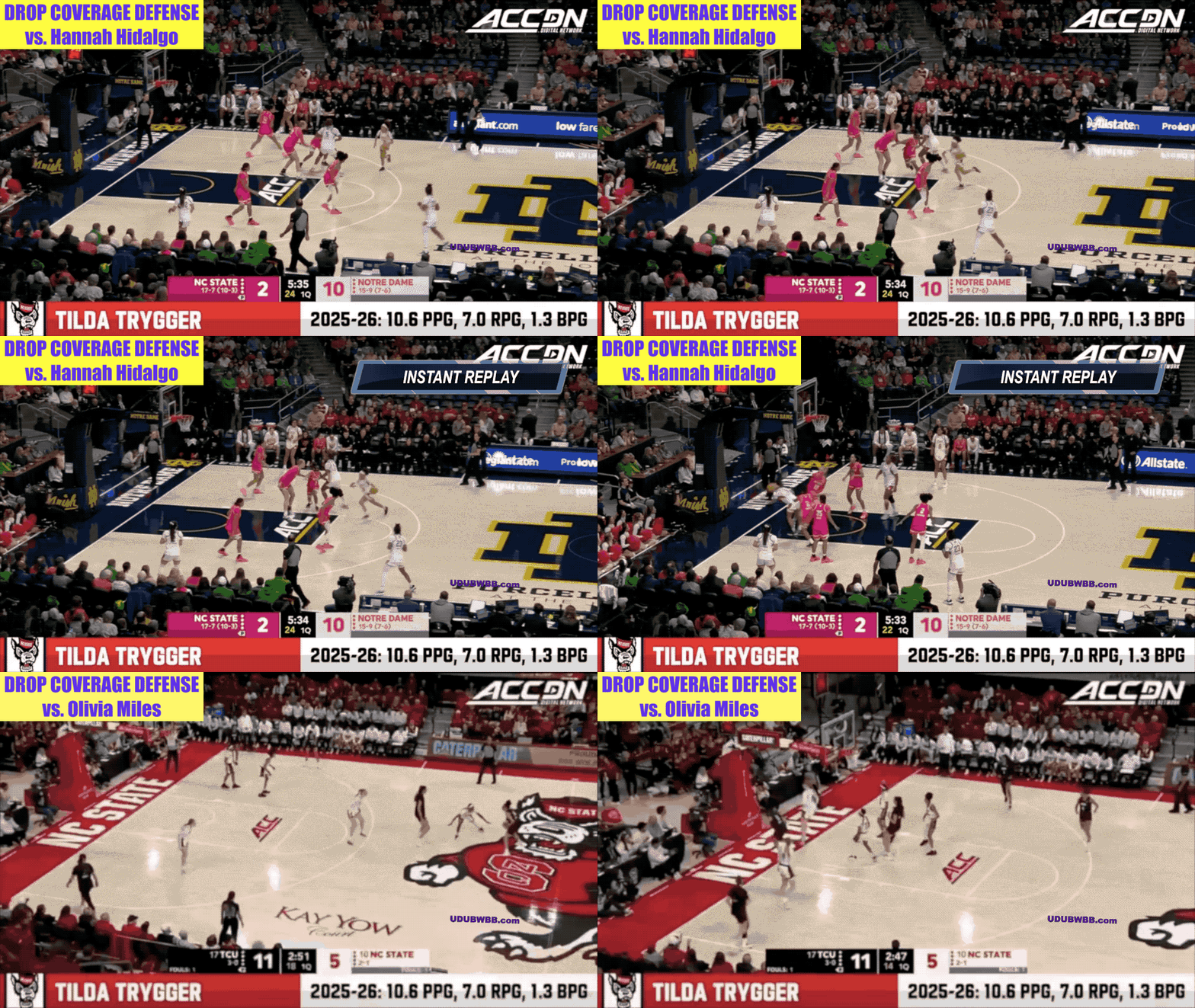
Her mobility allows for soft hedges and late switches without creating mismatches.
The Huskies can now toggle between coverages based on opponent personnel — something they couldn’t consistently do last season.
And with McGaughy beside her, Washington finally has a two‑big lineup that doesn’t compromise lateral quickness.
4. Stabilizing the Rebounding Battle
Washington has been competitive on the glass, but not dominant. Trygger helps fix that:
She’s strong on defensive boards (4.3 per game), which fuels transition; and solid on the offensive boards (2.7 per game), creating second chance scoring opportunities.
Her 6’6″ length improves contested rebounds, an area where UW struggled against top‑tier frontcourts.
She allows McGaughy to rebound more freely from the weak side, where she’s most effective.


