

On Thursday, March 5th at 9am, the Washington Huskies (20-9,10–8 Big Ten) enter the 2026 Big Ten Tournament to take on the USC Trojans (17–12, 9–9 Big Ten) for their Big Ten Tournament second‑round matchup.

Both teams arrive in Indianapolis with a clear identity: Washington brings disciplined half‑court offense, physical rebounding, and a point guard who controls tempo. USC brings length, athleticism, and a primary playmaker who can flip a game in a possession.
The Huskies’ efficient, guard‑led attack and stingy defense will clash with USC’s length and star‑driven offensive creativity, making pace and tempo control plus the rebounding battle the decisive matchups.
Washington Huskies Preview
The Huskies enter Indy averaging 72.0 points per game while allowing opponents just 61.6 — a significantly favorable differential on efficiency and execution on both offense and defense.
UW’s defense often forces opponents to grind through their half‑court sets, where defensive structure and communication matter more than raw athleticism.
Offensively the Huskies shoot a modest 44.7% overall; but an encouraging 50.5% on all two-point attempts; an efficient 63.8% at the rim; as well as a respectable 34.3% from three-point range.
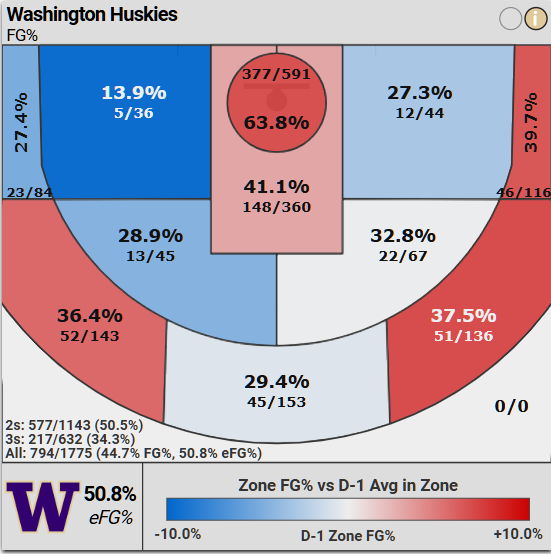
Washington’s offensive profile is deeply guard‑centric. The Dawgs excel at creating high‑quality shots with smart ball movement, patient pick‑and‑roll reads, and constant off‑ball motion, they carve out clean looks at the rim and open threes.
In a tournament setting, that kind of intentional offense is indispensable, especially against a USC squad that wants to speed the game up and live off forced turnovers.
Sayvia Sellers and a Balanced Husky Core
Washington’s 5’7″ junior point guard Sayvia Sellers is the offensive engine who averages 19.2 points on 59.1% shooting on all two-point attempts and 37.2% from beyond the arc; while dishing out 3.6 assists per game.
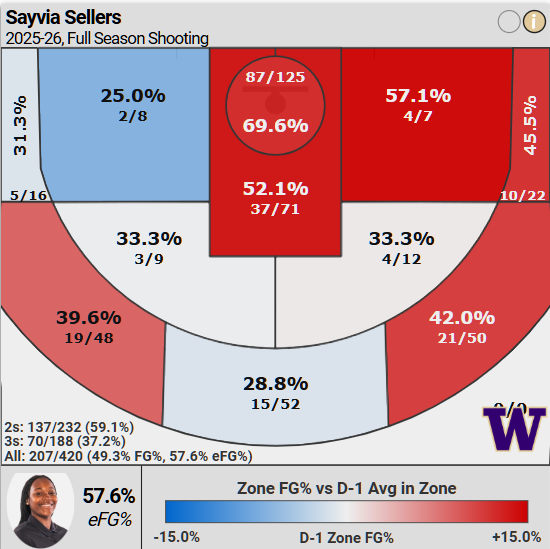
Sellers does more than score; she dictates pace. When she has the ball, the game moves at Washington’s preferred speed. Sellers can probe a defense with her dribble, read defensive rotations, and either attack the rim or find teammates in rhythm.
Furthermore, Sellers’ defensive impact is essential to UW’s success: her perimeter defense limits dribble penetration and keeps Washington’s back line from getting overextended. Against USC and its primary playmaker Jazzy Davidson, Sellers’ ability to stay poised under pressure—and avoid turnover‑driven runouts by USC—could be the single most important factor in this matchup. If Sellers can keep the Trojans from turning UW mistakes into easy points, Washington gains a distinct advantage.
Next to Sellers, 6’0 sophomore. wing-guard Avery Howell is averaging 13.4 points on 49.1% shooting from the field; 61.2% on all two-point attempts; an elite 41.8% from the three-point line; as well as an elite 73.4% efficiency at the rim.
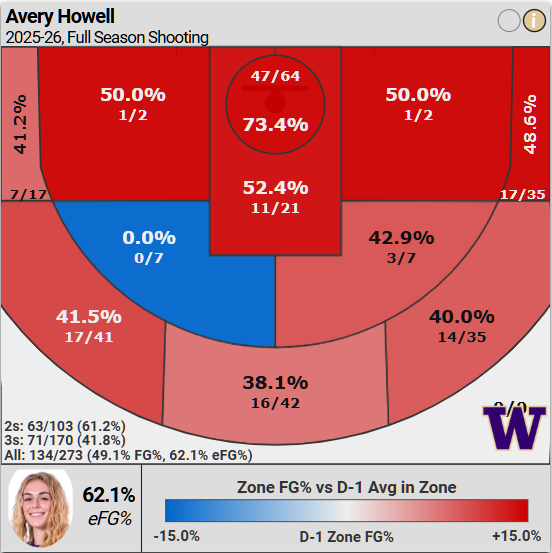 Howell also grabs an impressive 8.4 rebounds per game, setting a physical tone for Washington by attacking the glass relentlessly, both defensively and offensively.
Howell cleans up defensive boards, initiates fast breaks, and adds timely scoring with put‑backs and long‑range jumpers.
Additionally, Howell’s two-way presence is a crucial weapon against USC’s length and athleticism: her ability to neutralize the Trojans’ second‑chance points with defensive rebounds or provide timely scoring by hitting deep threes or score inside with offensive put‑backs makes her a tough matchup for USC.
Elle Ladine gives UW a versatile, attacking wing who can score from the mid-range or beyond the arc, while defending multiple spots, and providing secondary playmaking and rebounding.
Elle Ladine adds 9.8 points per game and hits 31.5% from three-point range, along with the ability to finish with 69.8% efficiency at the rim.
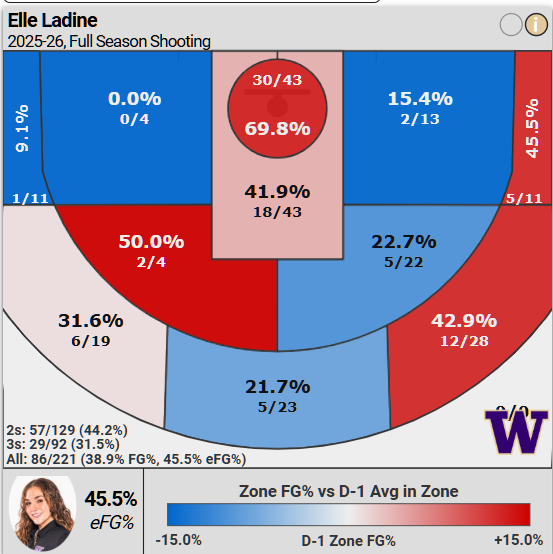
Meanwhile, Brynn McGaughy anchors the frontcourt offense with her 8.9 points on an efficient 69.8% scoring around the rim.
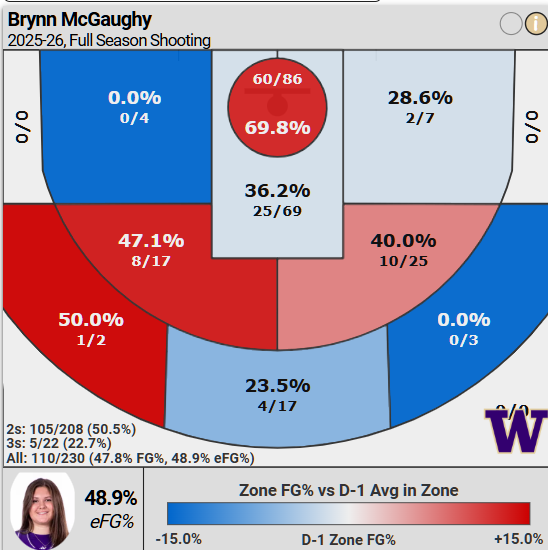
Additionally, McGaughy’s 1.2 blocks per game and her interior defense discourages easy drives and forces opponents into contested shots. Against USC, McGaughy’s presence will be critical in limiting layups and put‑backs when the Trojans’ guards attack. If she stays out of foul trouble and patrols the paint effectively, Washington’s defensive game plan becomes far more sustainable for 40 minutes.
USC Trojans Preview
On offense, USC averages 70.1 points per game; while the Trojans defense holds opponents to 62.4 points per game.
The Trojans are most efficient scoring at the rim (within 4.5 feet) making 61.6% of their shots; while making 42.4% from farther away in the lane.
USC shoots a pedestrian 30.5% from three-point range; as well as a modestly efficient 47.8% on all two-point attempts.
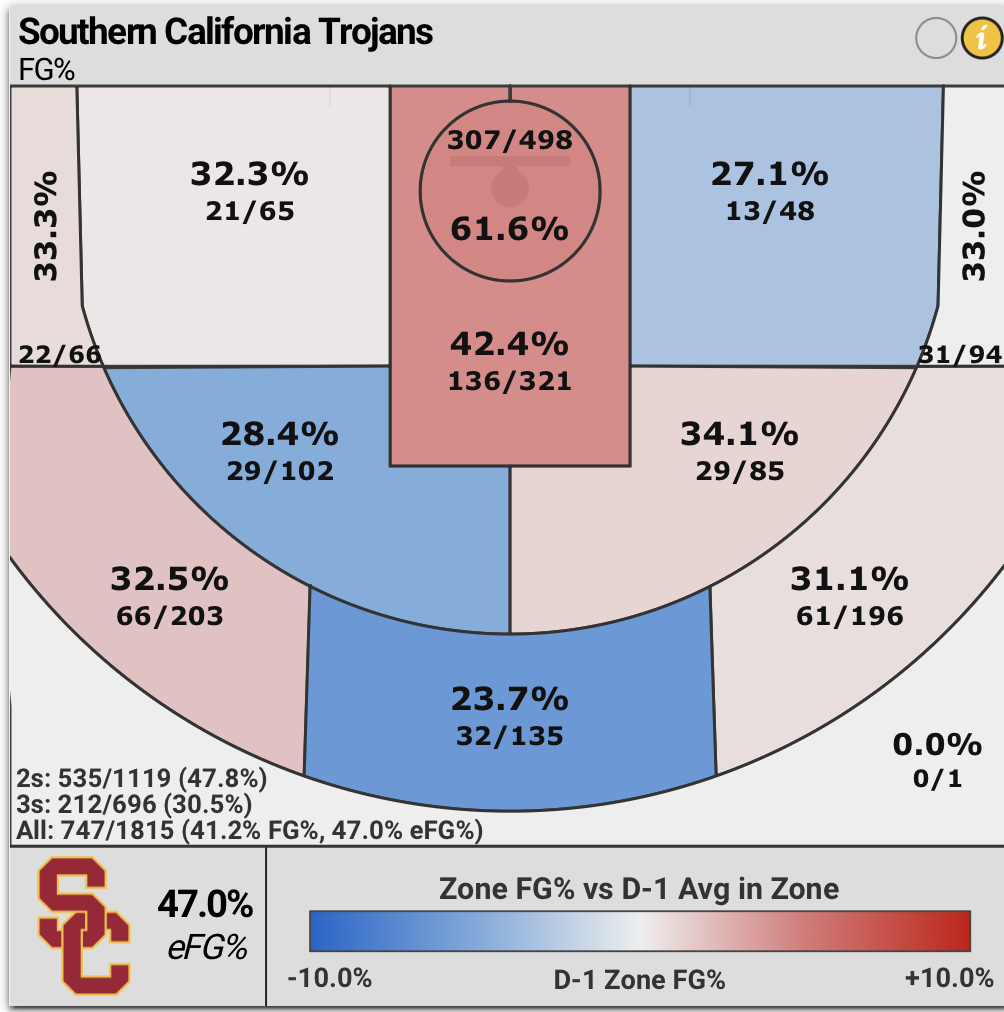
The Trojans defense will be a challenge to Washington because USC features multiple excellent to elite man-to-man defenders.
USC Star-Driven by Jazzy Davidson with Dynamic Guard-Play
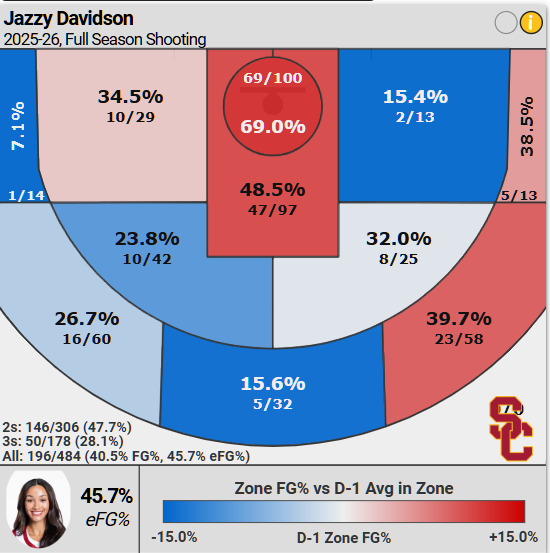
On the opposite sideline, USC leans heavily on 6’1 wing-guard Jazzy Davidson, the freshman breakout star and USC’s do‑everything leader averaging 17.9 points; 5.9 rebounds; 4.3 assist; along with elite defensive numbers (2.0 steals and 2.1 blocks).
Davidson’s one glaring weakness is she is not an efficient three-point shooter (28.1%), but she makes big shots consistently and her versatility makes her the most impactful Trojan player on the floor, at all times.
Davidson can score at all three levels, create for teammates, and disrupt opposing offenses by jumping passing lanes for steals and challenging shots.
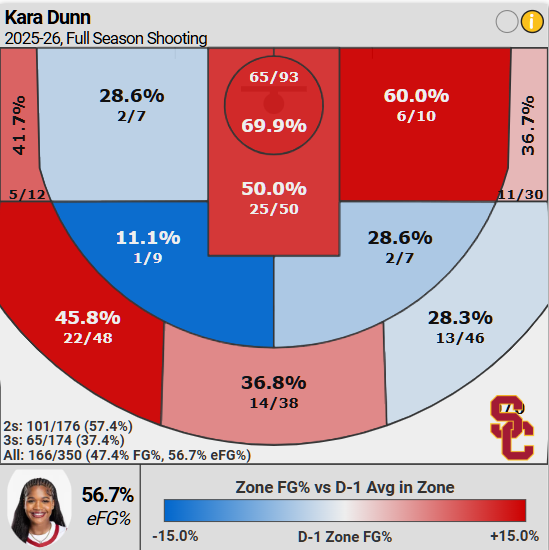
 Next to Davidson is 5’11” senior guard Kara Dunn, the Trojans second-leading scorer at 15.6 points per game; as well as team-leading three-point shooter at 37.4%; while also converting 57.4% of her two-point attempts. Dunn’s ability to provide high‑efficiency scoring when defenses overcommit to Davidson is crucial to the Trojans’ success..

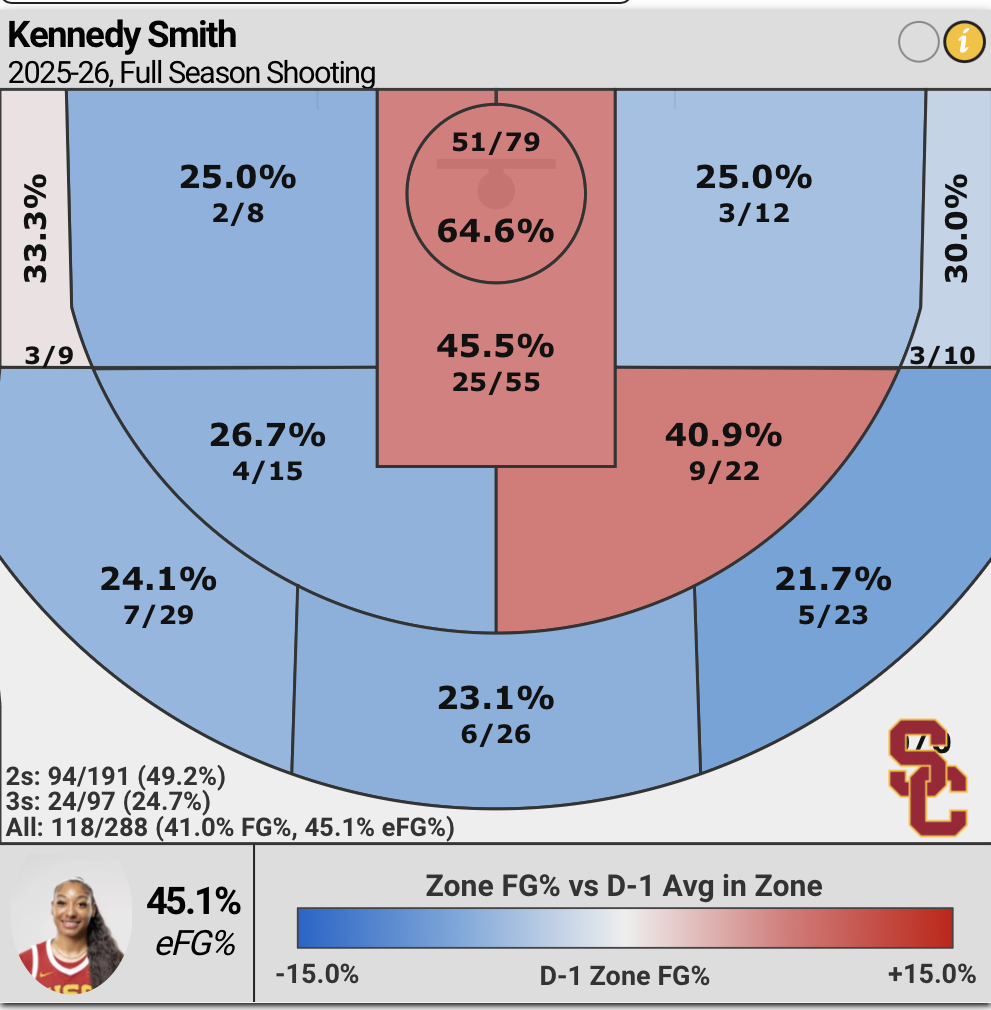
Kennedy Smith, a 6’1″ sophomore guard, is the Trojans second most versatile player: she scores a third-leading 11.5 points per game; grabs a third-leading 4.5 rebounds; dishes a second-leading 3.7 assists; along with a third-leading (tied) 1.8 steals; and a second-leading 1.2 blocks.

Finally 5’4″ guard Londynn Jones. rounds out USC’s offensive core. The Trojans third-leading scorer at 10.2 points, Jones is best known as a three-point specialist (32.1%).

These key Trojans round out a dangerous backcourt rotation, contributing scoring, playmaking, and energy. Collectively, these Trojans thrive when the game opens up—when turnovers lead to runouts, and when they can switch across multiple positions to suffocate ball handlers.
Winning the Margins: Pace vs Tempo, Rebounding & Shot Quality
This game will likely hinge on three interconnected battlegrounds: pace control vs. game tempo, rebounding, and shot quality/efficiency.
First, pace (# of possessions in a game) vs. tempo (game flow). Washington wants this to be a half‑court chess match. USC wants it closer to a track meet. If the Huskies, through Sellers, can control the pace of each possession to initiate their offensive sets, and avoid hurried decisions, they drag the Trojans into UW’s preferred style, i.e., slowing the pace reduces the number of USC offensive possessions (the less efficient team in this matchup). Conversely, UW’s forced turnovers become USC’s oxygen, fueling their transition attack and increasing USC’s pace and creating a game tempo (or style) which favors USC.
Second, rebounding affects extra possessions and pace. With Howell and McGaughy controlling the glass, Washington can both limit USC’s second‑chance scoring and prevent quick outlets that fuel fast breaks.
Third, shot quality and shot efficiency will matter more than volume. The Huskies generate clean looks via structure; USC often leans on individual shot creation. Since shot quality usually results in better shot efficiency, over 40 minutes, the side that produces the better diet of shots typically prevails. In a tournament game, that dynamic usually favors the more disciplined team—here, that is Washington.
Critical In‑game scenarios to watch for during the game are:
Early foul trouble for McGaughy or Howell. If either sits, USC’s drives and offensive rebounding become much more dangerous.
A Davidson scoring burst. If she gets hot, USC can erase deficits quickly; Washington must respond with disciplined offense and timely stops.
Bench impact. Washington’s depth and the success of UW role players who contribute with unexpected shot-making could be the difference in a possession-by-possession game that could wear down USC starters late.


