

On Sunday, February 15th, the #25-ranked Washington Huskies (18–7, 8–6 Big Ten) welcome the Oregon Ducks (18–8, 6–7 Big Ten) to Seattle in a rivalry game matchup that is bigger than just another conference clash.

It’s Washington vs. Oregon, Huskies vs. Ducks, Dawgs vs. everything green and yellow—played with March looming just around the corner.
As both teams angle for momentum heading into the postseason, the winner walks away with more than bragging rights; they grab a signature win to finish the regular season with some momentum heading into the post-season.
Contrasting Basketball Blueprints
This matchup lives in contrast.
Washington has built a profile around defensive discipline and domination on the glass.
The Huskies average 40.3 rebounds per game overall and 37.2 boards in Big Ten play, good for fourth in the league.
They don’t just rebound—they overwhelm, posting a plus-9.0 rebound margin that wears opponents down over four quarters.
At the center of that approach sits 6’0″ wing-guard Avery Howell, UW’s relentless force in the paint. Her 8.4 rebounds per game set the tone for the Dawgs team-rebounding efforts.
Thus, Washington has crafted a sturdy, repeatable formula — crashing the glass combined with a defense that holds opponents to just 39.7% shooting and 61.1 points per game,
Oregon, by contrast, thrives on pace and efficient offensive flow.
The Ducks score 76.9 points per game while shooting a sharp 46.2% from the field. The Ducks look to stretch defenses with spacing, ball movement, and shot-making that forces teams out of their comfort zones.
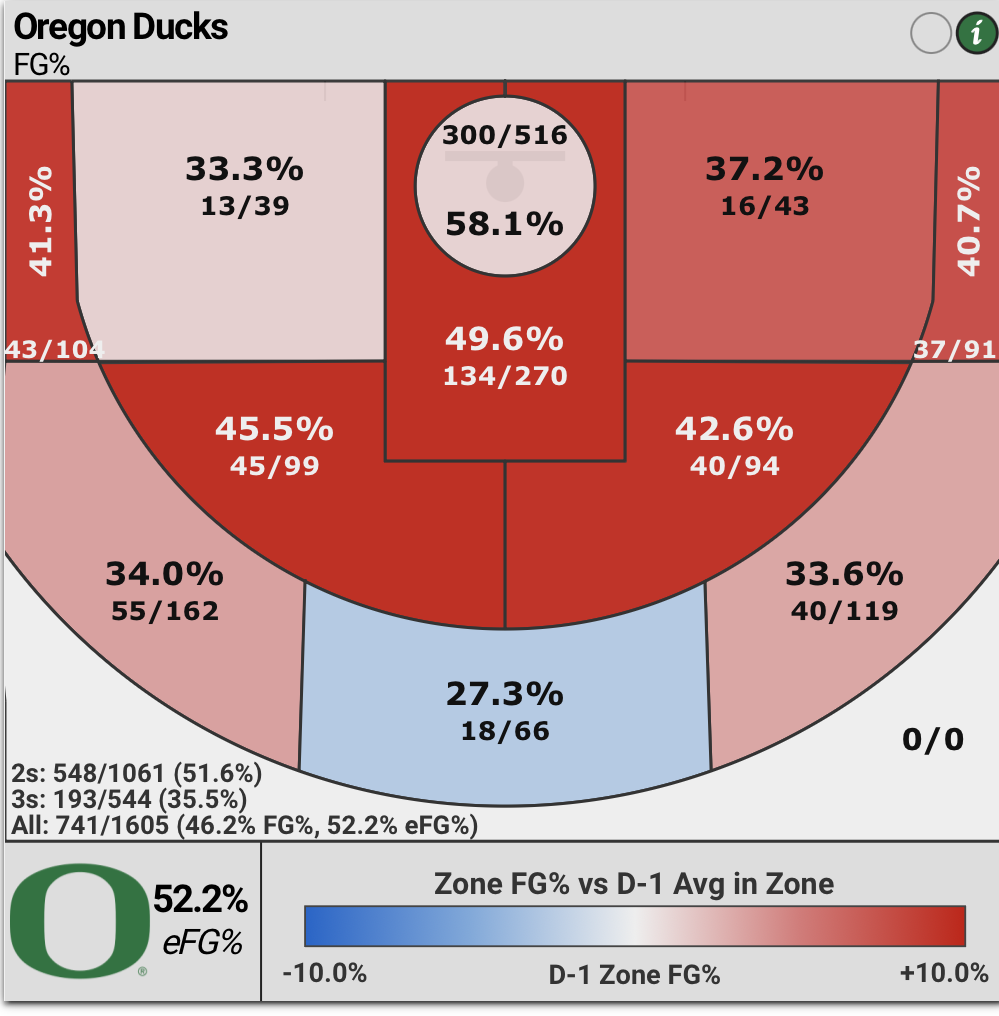
Thus, Sunday’s clash becomes a clear test: can Oregon’s offensive rhythm and efficiency knock Washington out of its defensive stance, or will the Huskies drag the Ducks into a half-court grind where rebounds and stops rule the day?
The Dawgs’ Edge: Defense, Boards, and Big-Moment DNA
Washington’s offensive numbers are a testament to their scoring balance and efficiency.
The Huskies average 73.4 points per game and shoot 45.1% from the field, including 35.1% from three; blending enough firepower with the defense-first philosophy embraced by head coach Tina Langley and Husky players.
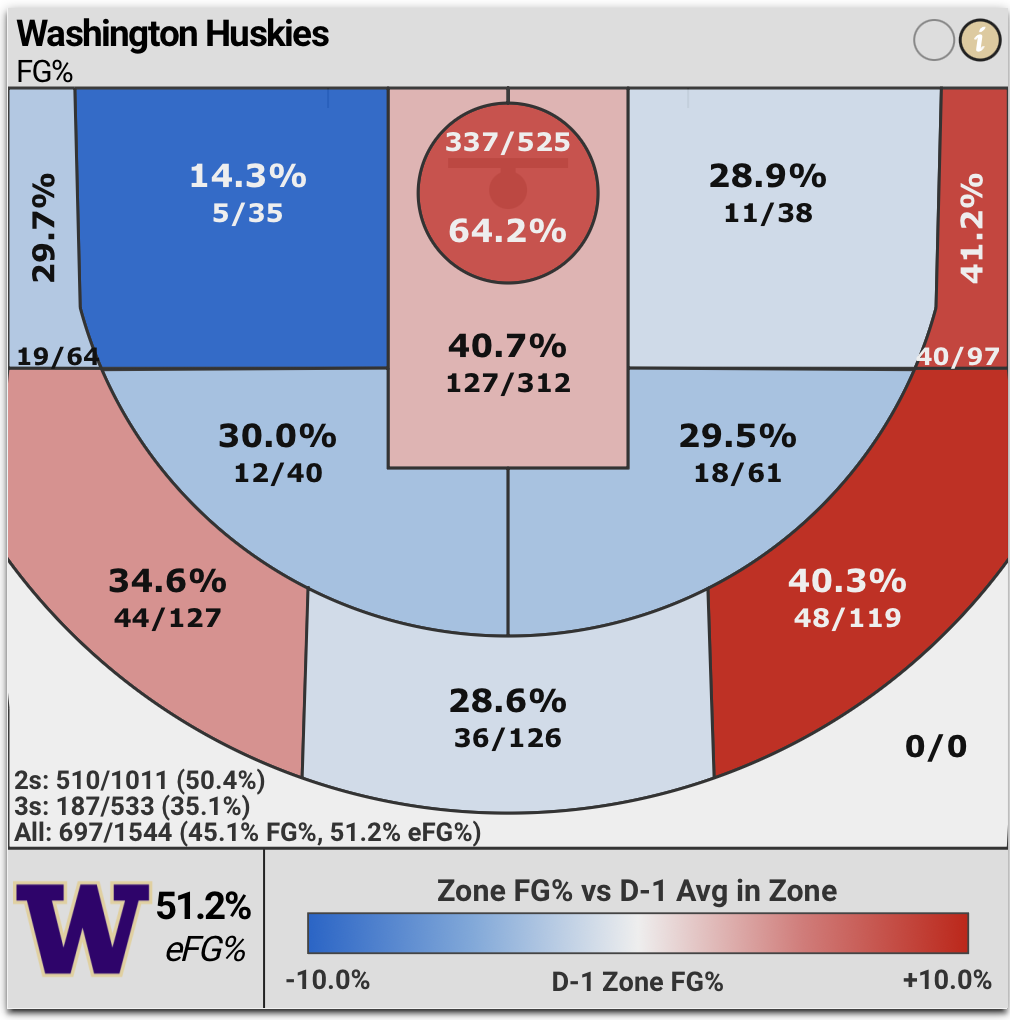
Over their last 10 games, UW has gone 6–4 while maintaining a 73.4-point scoring clip and 46.2% shooting overall, proving this Husky team’s style travels and holds up over time.
Even in losses, the Husky blueprint shows.
In a 56-65 setback at No. 15 Iowa, Washington actually controlled the boards 35–26 and defended with intensity, but 19 turnovers and a 4-of-21 night from three doomed the Dawgs.
The Iowa game underscored a crucial truth: when Washington takes care of the ball and hits a reasonable share from beyond the arc, their defense and rebounding can carry them to the win.
Meanwhile, back home in Seattle, the numbers tilt even more in UW’s favor.
The Huskies are 12–3 at home this season, and historic Hec Ed has become a real weapon. The hometown crowd feeds off the Dawgs’ defensive stops and three-point barrages, creating a feedback loop that fuels extended runs.
At 7.5 made threes per game, the Huskies have the deep range shot-making to stress Oregon’s perimeter defense, which typically surrenders six triples a night.
If Washington finds its shooting rhythm from beyond the arc early, the Ducks will face difficult decisions—collapse on the glass and give up clean looks from three, or stay home on UW shooters and watch Howell and company attack the offensive boards.
Purple and Gold Firepower: Sellers, Howell and a Supporting Core
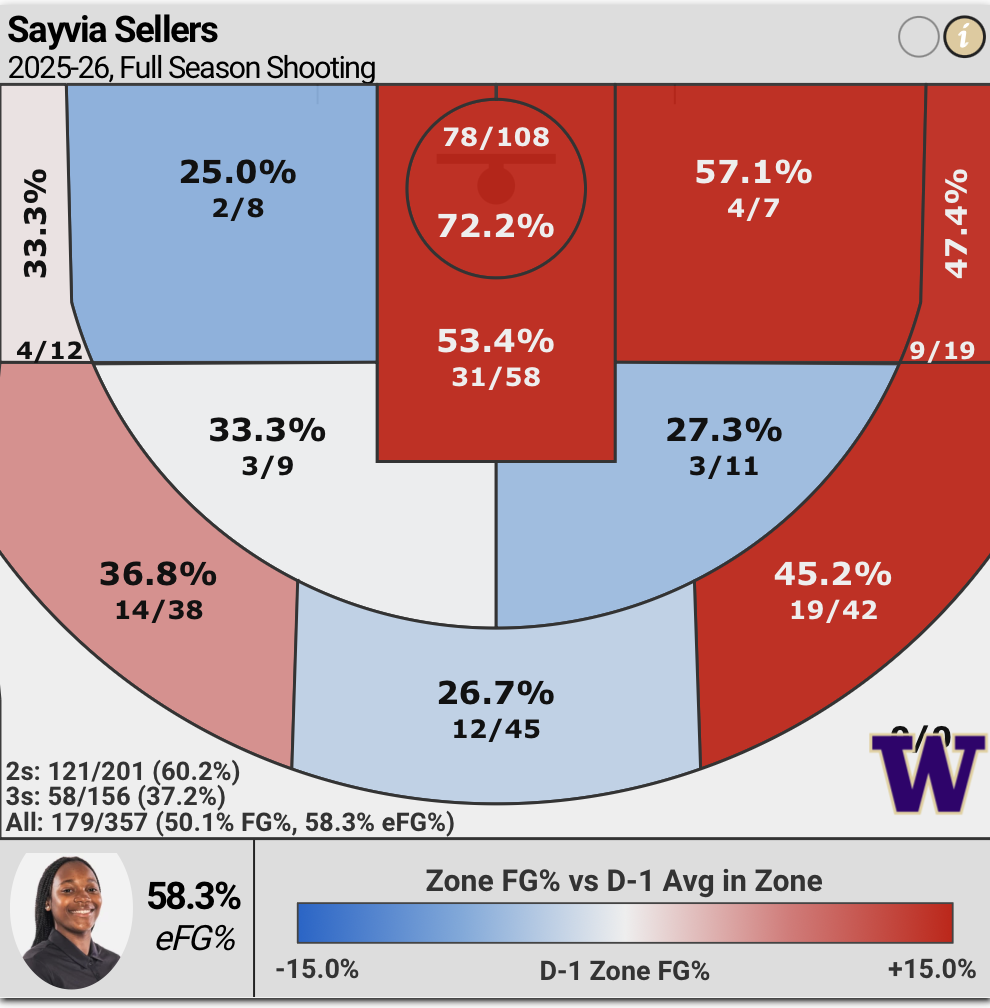
Every successful team needs a closer: for Washington, that’s 5’7″ point guard Sayvia Sellers averaging 19.4 points per game.
Sellers shoots an efficient 50.1% from the field overall and 37.2% from three-point range, turning ball screens and isolations into high-value UW possessions.
Sellers brings a scoring mentality that perfectly complements UW’s defensive backbone — her relentless downhill attacks put opposing defenders on their heels.
And Sellers isn’t just a bucket-getter; she’s a two-way tone-setter with 1.6 steals per game that reflect the Dawgs’ defensive bite.
Against Oregon’s pace-driven offensive attack, Washington will need Sellers to be both a stabilizer and a spark, matching the Ducks’ scoring surges while managing pace to stay within the Huskies’ offensive structure.
Next to Sellers, 6’0″ wing-guard Avery Howell has blossomed into one of the Big Ten’s premier two-way threats. Howell pours in 13.7 points per game, while stretching defenses by hitting an impressive 42.0% from three.
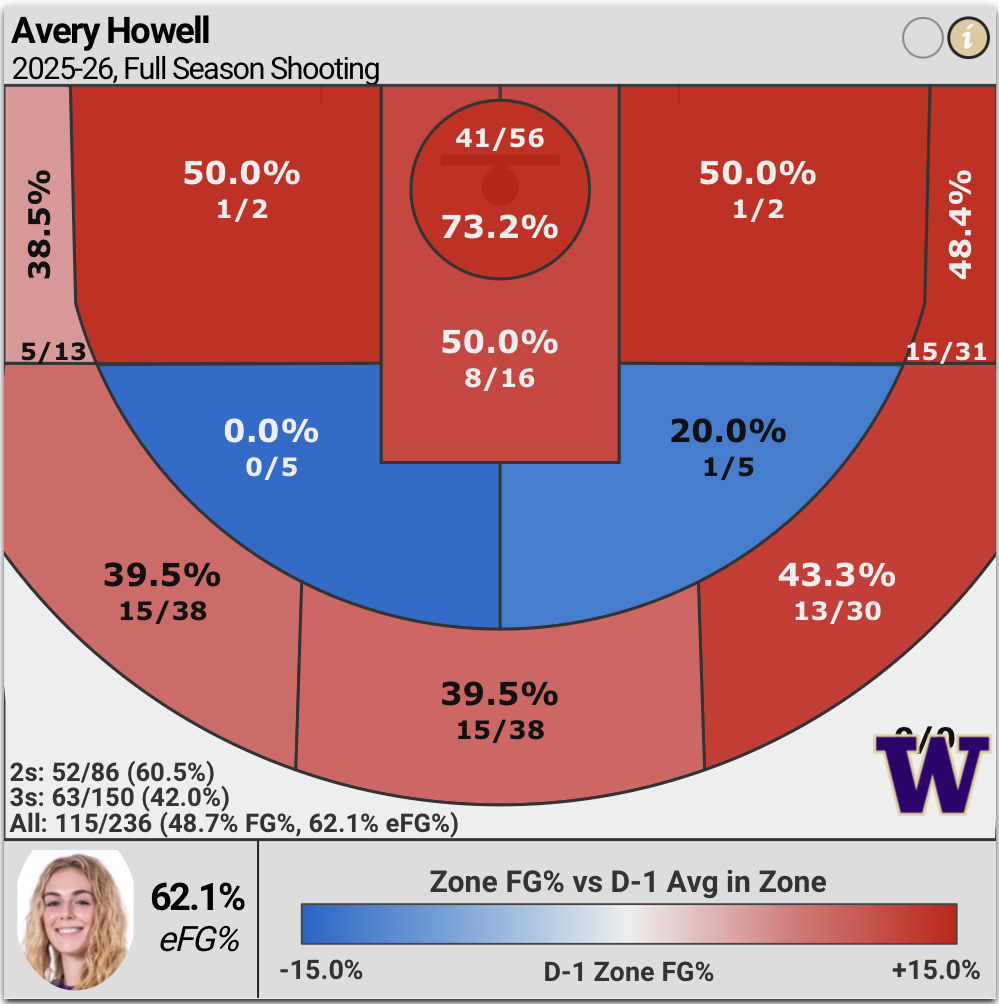
Howell is a combo player —physical rebounding and elite perimeter sharpshooter — that forces Oregon to defend every inch of the floor.
If the Ducks over-help on Sellers, Howell can burn them from the arc; if they stay home on Howell, Sellers finds more lanes to the rim.
Washington’s scoring depth further complicates Oregon’s scouting report.
Husky 5’11” wing-guard Elle Ladine chips in 10.4 points per game; hitting 36% from three-point range; and finishing with 65.7% efficiency at the rim.
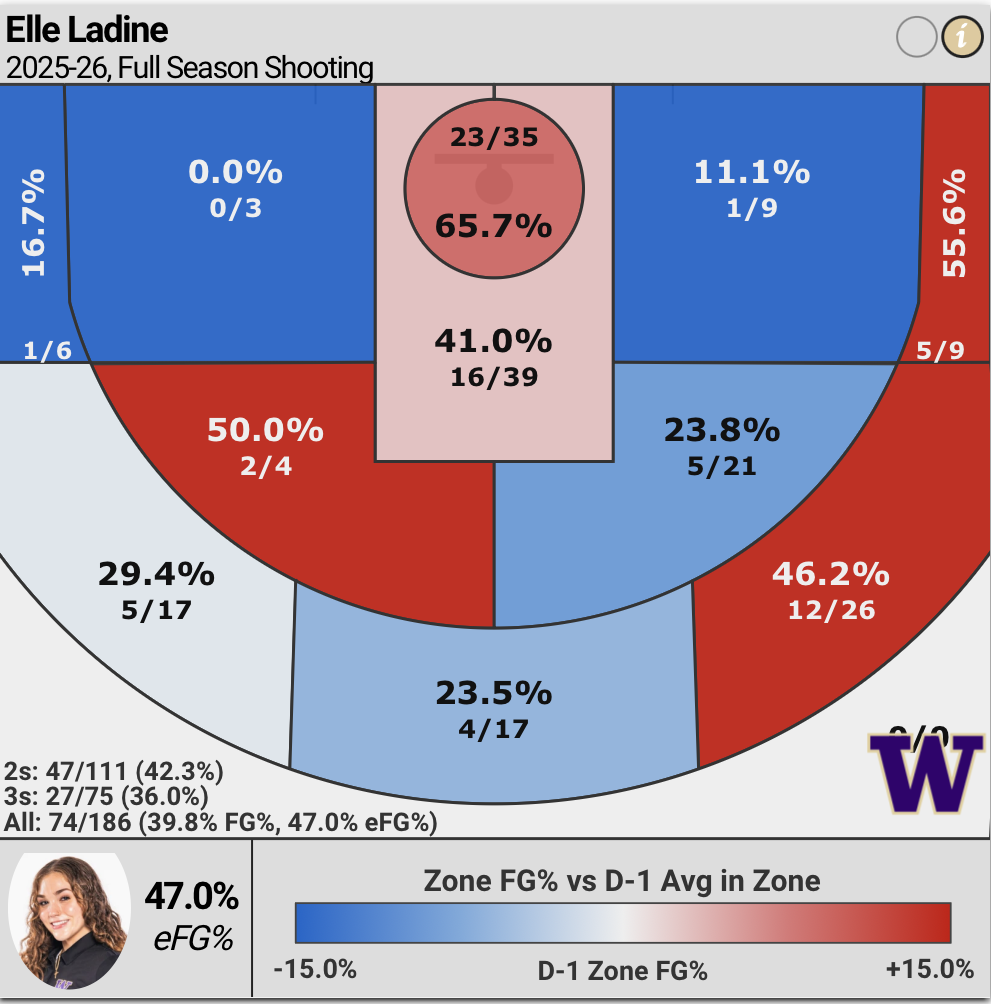
Ladine is the epitome of a versatile, attacking wing who can score, defend multiple spots, and provide secondary playmaking.
Plus, 6’3″ freshman forward Brynn McGaughy scores 8.4 points, grabs 4.5 rebounds, while converting 70.4% at the rim. McGaughy is also fifth in the Big Ten in blocks (1.2 per game), anchoring Washington’s interior defensive presence.
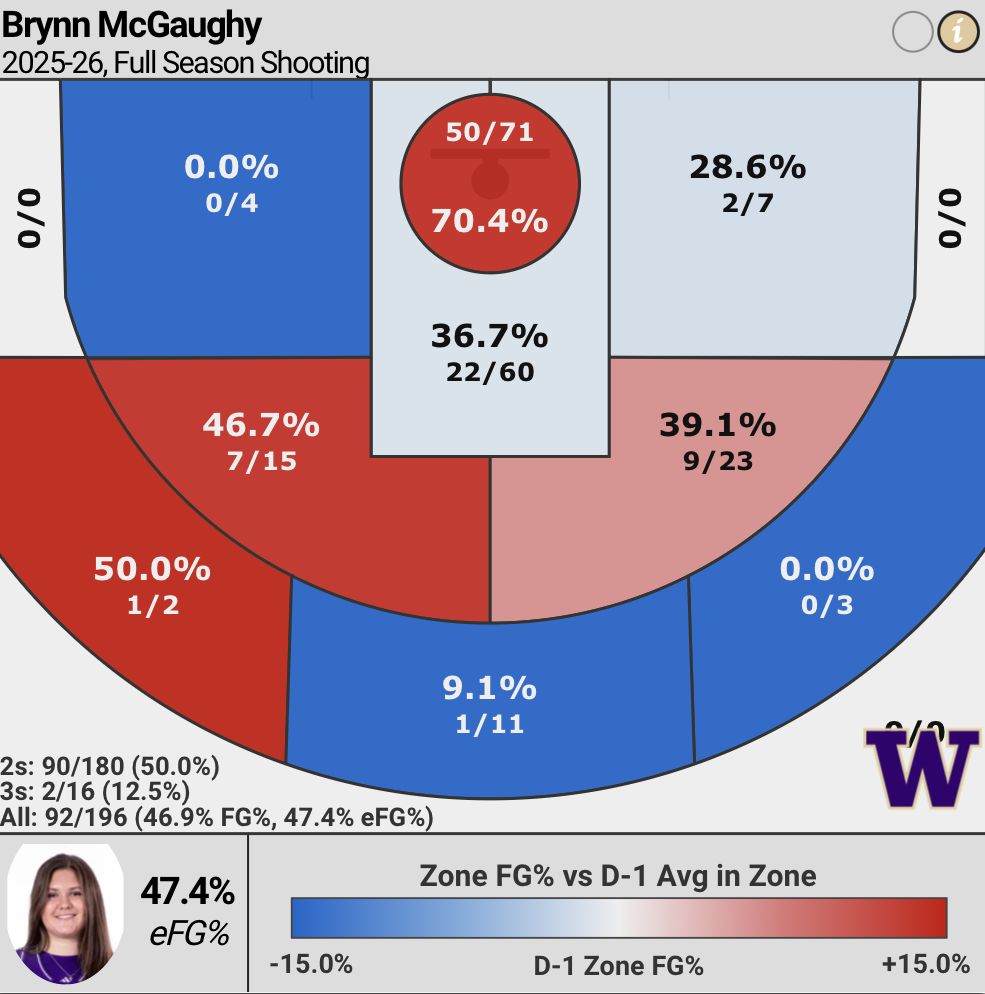
Together, this offensive core helps make UW’s rotation layered and adaptable.
Ducks’ Firepower
While Washington leans into its defensive identity, Oregon arrives with bona fide offensive firepower.
Over their last 10 games, the Ducks average 17.5 assists and 8.2 steals, indicating a group that thrives in transition and punishes careless ball-handling. The Ducks turn opponent’s turnovers into instant offense and make them pay for every mistake.
The Ducks 5’11” point guard, Katie Fiso, steers the Ducks’ attack with 14.6 points and 6.9 assists per game on 47.5% shooting; and a modest three-point percentage (23.5%).
Numbers don’t fully capture Fiso’s impact; her real value lies in paint touches, drive-and-kicks, and the way she organizes Oregon’s offensive spacing.
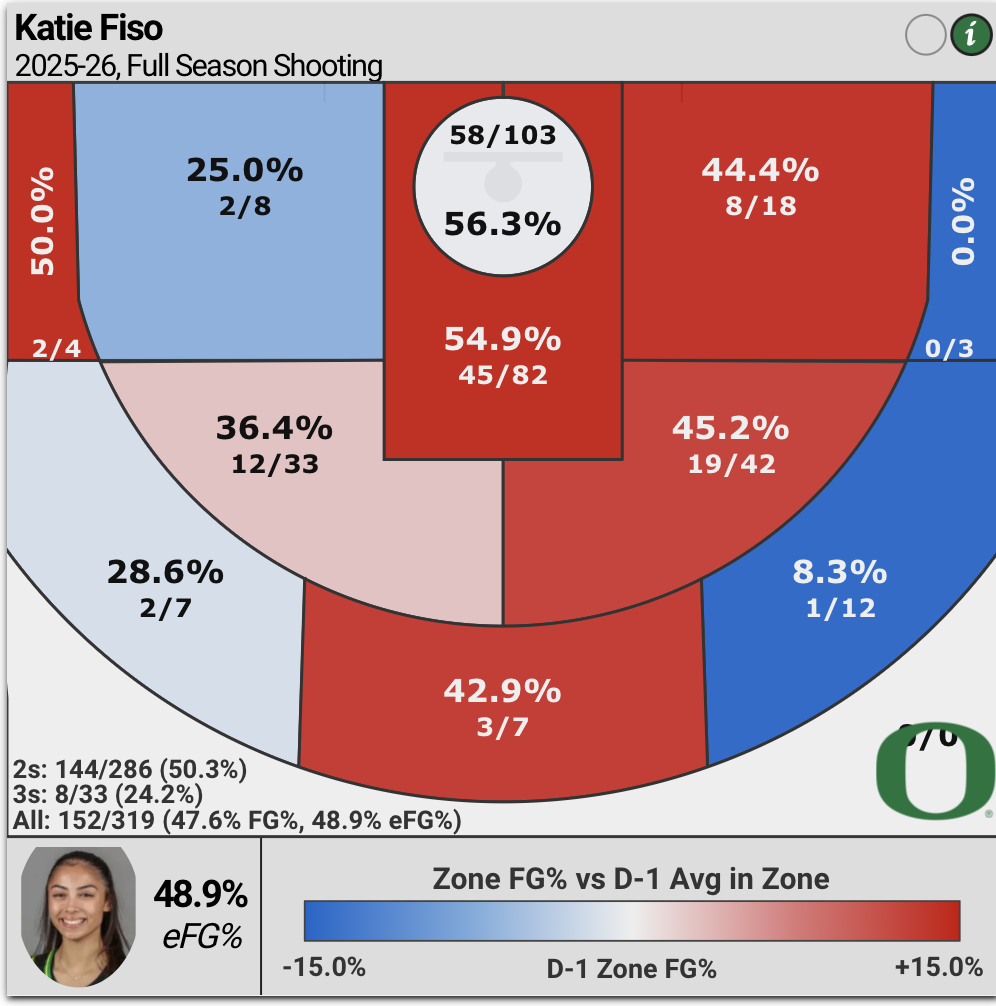
 When Fiso gets downhill, shooters find space, and defenders are forced into difficult closeouts.
 When Fiso gets downhill, shooters find space, and defenders are forced into difficult closeouts.
Moreover, the Ducks’ wings and forwards present matchup problems of their own.
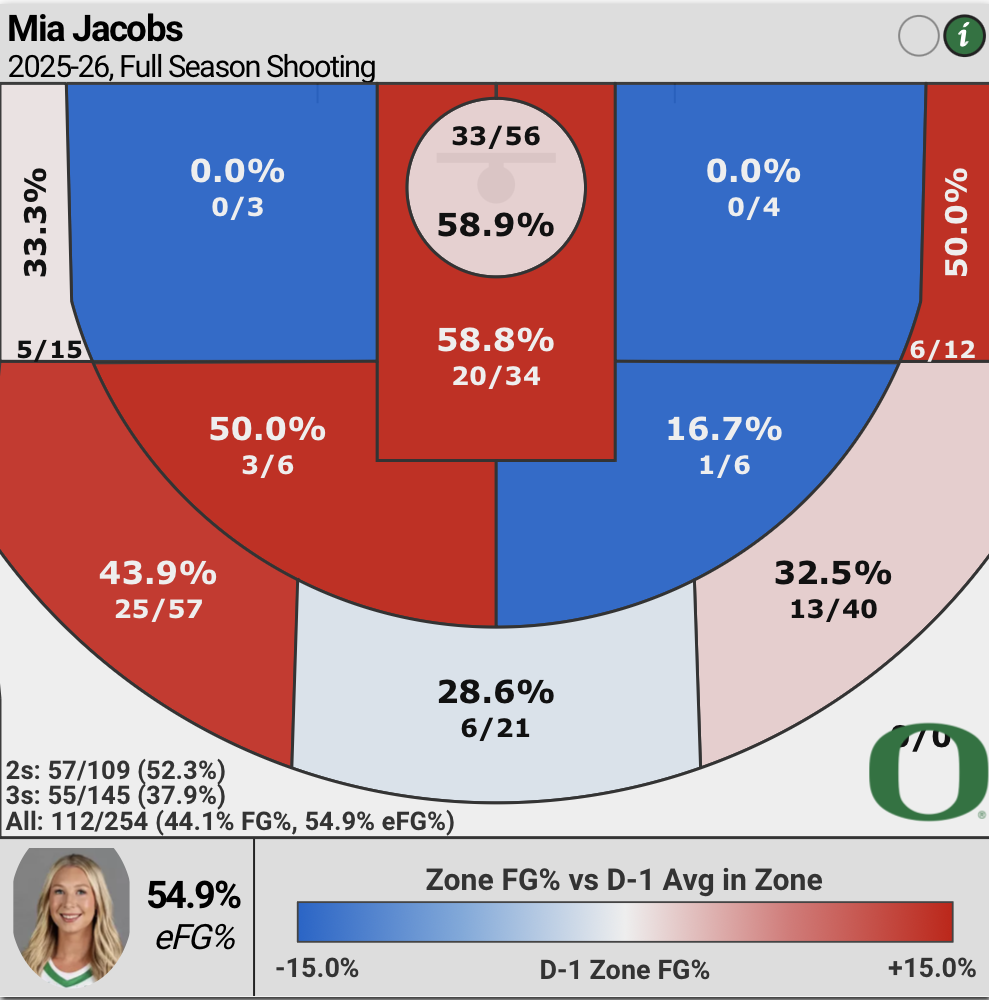
Mia Jacobs , a 6’2″ forward, adds 14.0 points per game and shoots 37.9% from deep;
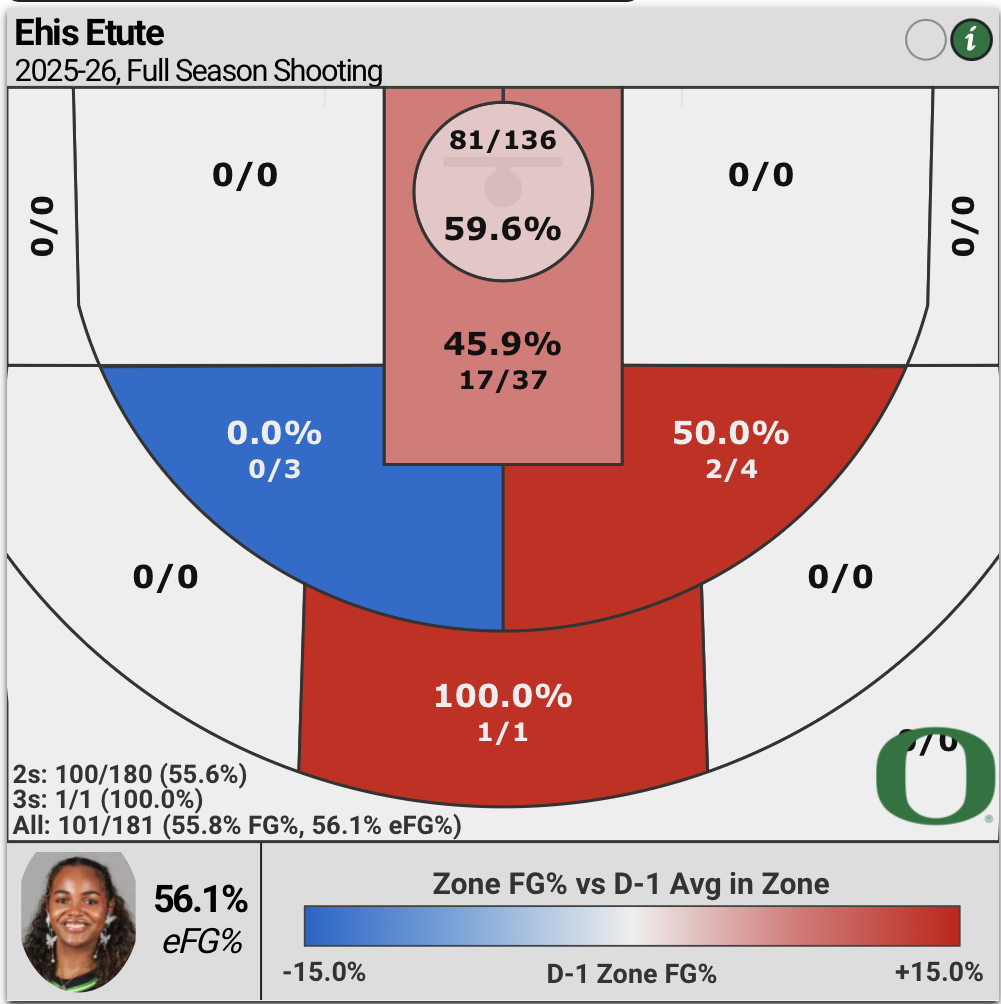
while Ehis Etute scores 10.8 points on 55.6% shooting on two-point attempts; and grabs 8.2 rebounds per game.
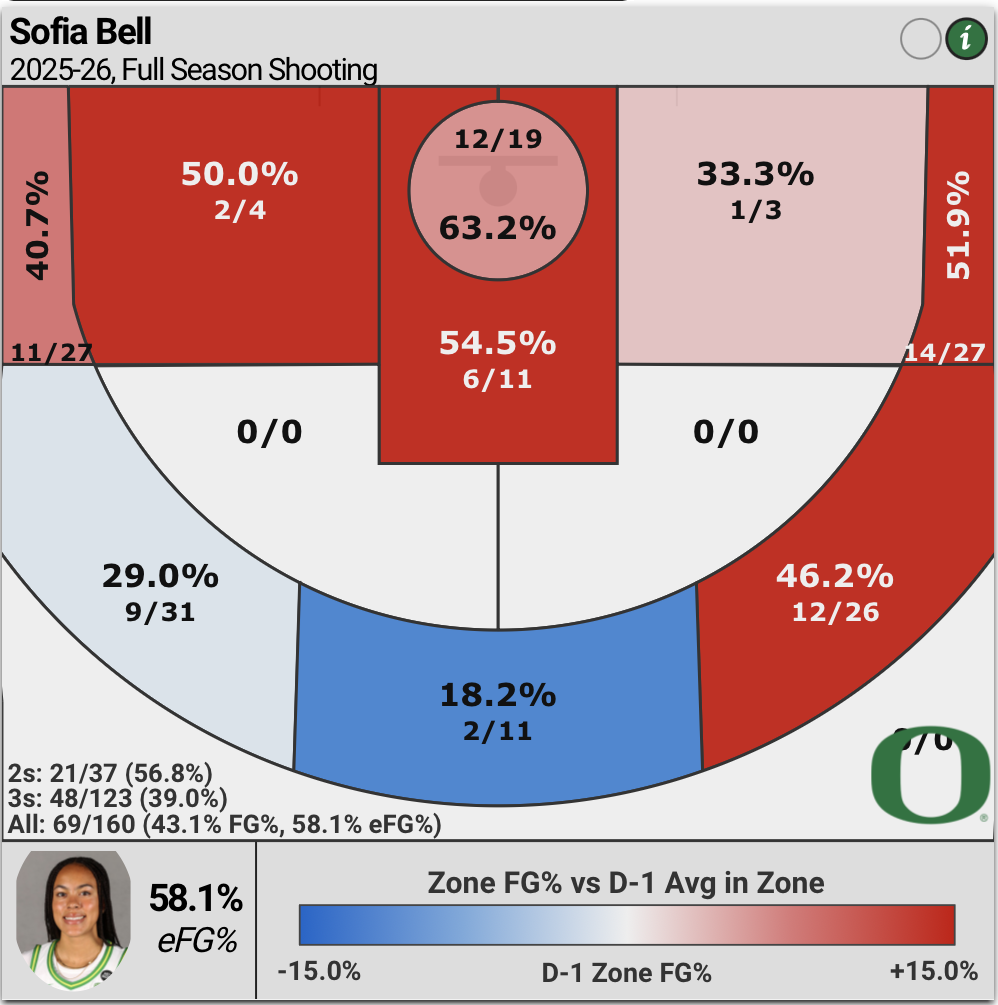
And Oregon relies on two more key players to supply enough perimeter punch to punish defensive lapses, 6’0″ combo guard Sofia Bell (39.0% from three-point range);
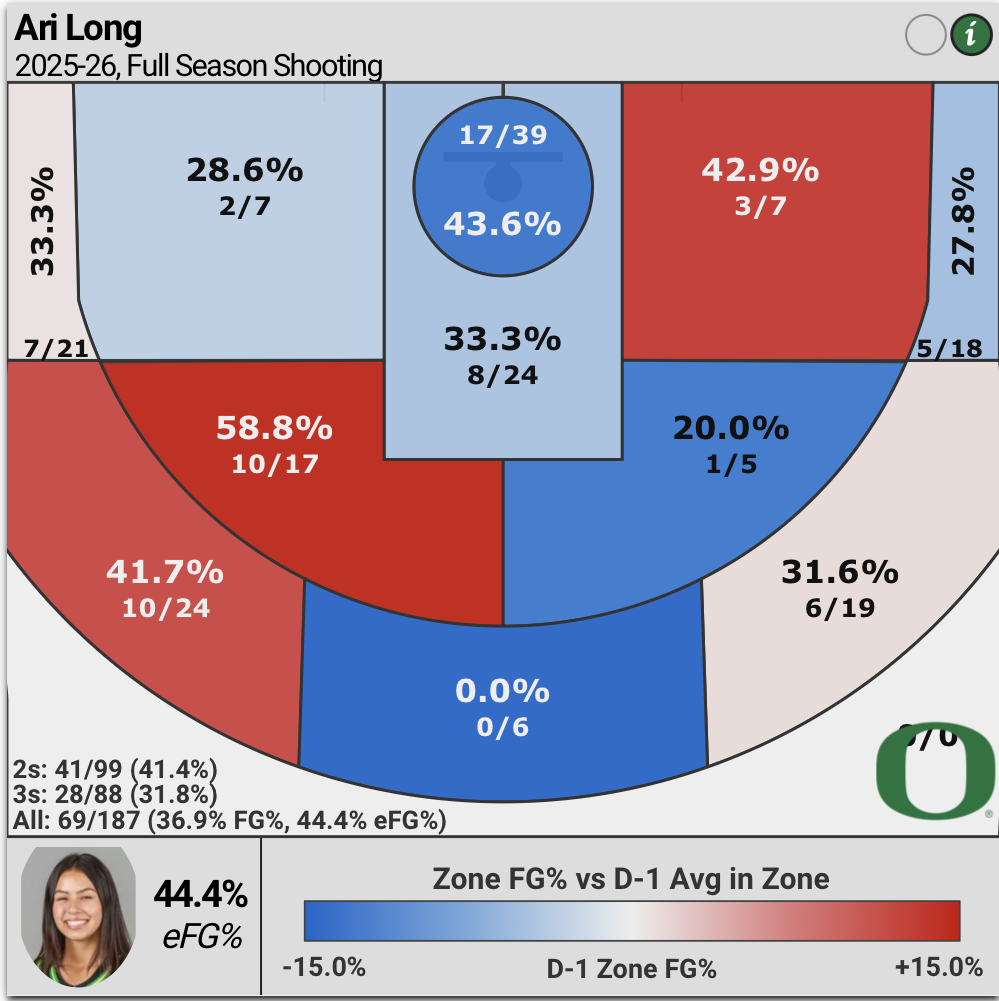
and 6’0″ guard Ari Long (31.8% from deep, 2.0 steals per game).